
%20(#49).jpg)
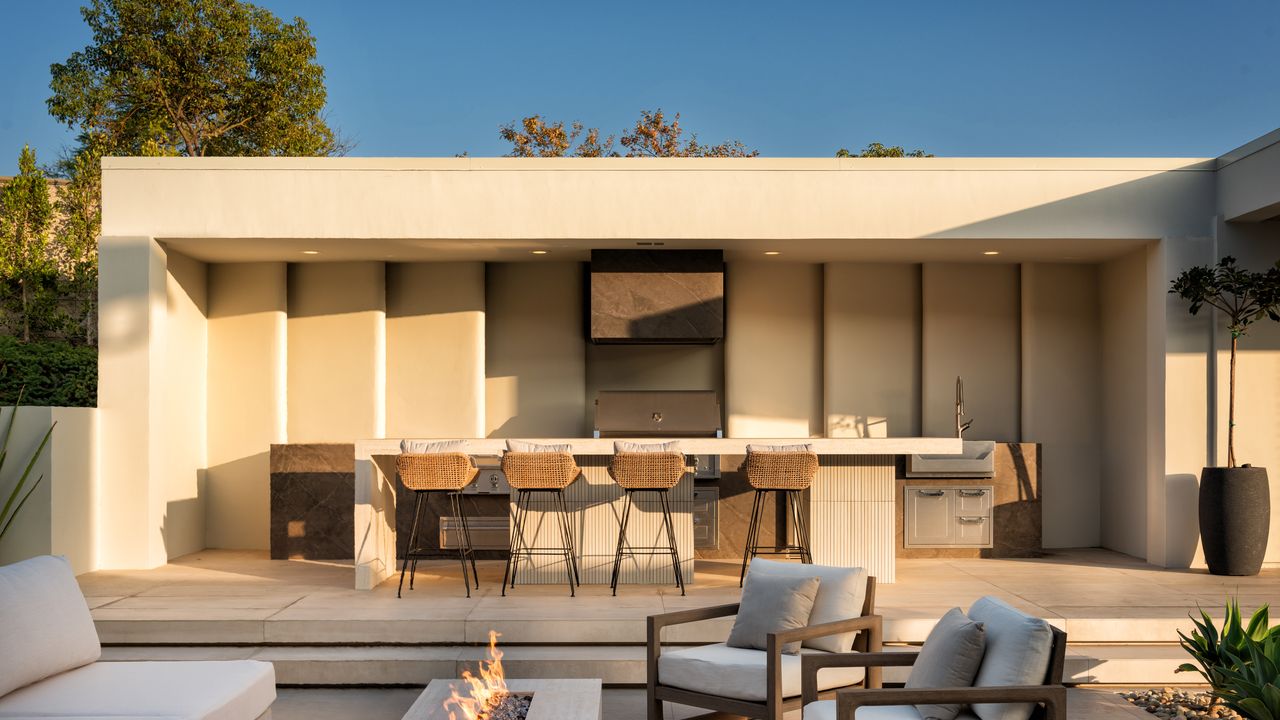
A striking backyard scene for a midcentury-style home in Texas includes several stainless-steel outdoor kitchen appliances, like a grill, pizza oven, refrigeration, and storage for easy hosting and entertaining. Above the main kitchen area, playful design accents are created with composite decking. “This property really lent itself to a unique design, and the outdoor kitchen was no exception,” says Joe Raboine, Vice President of Design at Oldcastle APG. “The kitchen has the conveniences needed for entertaining friends and family, and it has easy access to a beautiful pool to escape the Texas heat.”
Frequently asked questions about outdoor kitchen ideas
What are the trends for outdoor kitchens in 2026?
Homeowners are looking to create a natural sense of flow from their indoor space to their outdoor kitchens.
“Our firm is seeing clients that want spaces that blend comfort, performance, and natural materials with an aesthetic that is not just refined, but that seamlessly blends with the home’s interior design,” says Nikki Dalrymple of Acquire Distinguished Interiors. “Clients are asking for the same types of appliances for their outdoor kitchens that they have indoors. For instance, gourmet pizza ovens, under-cabinet beverage fridges, nugget ice cube makers, and professional-grade grills.”
Dalrymple also noted that people are eager to lean into organic materials such as clay, terra-cotta, reclaimed brick and wood, bluestone, cobblestone, and other natural elements for countertops, backsplashes, cabinetry, and flooring. Eco-friendly and natural materials are in, while composites are out.
There’s also an element of taking cues from a West Coast sensibility. Dalrymple says East Coast clients frequently want to use their outdoor spaces far into the chilly months, emphasizing wood-burning fireplaces and patio heaters.
“We love the flush ceiling mount heaters from Bromic that blend into ceilings and can be operated from a smartphone. Similarly, integrated firepits have been all the rage recently, too. Our clients are asking for outdoor sunken lounges built around a firepit to enjoy cocktails or small bites,” she noted.
Can you have an outdoor kitchen in a cooler climate?
Living in a cooler climate doesn’t have to mean you can’t embrace an outdoor kitchen. However, certain components need to be taken into consideration.
“We recommend looking for cold-rated appliances and materials that can withstand colder climates, such as granite, stainless steel, and marine-grade material,” Consalvo says. In addition to thinking about the materials with which you construct the space, Consalvo says it’s essential to prioritize the comfort of the people who will be congregating there in more frigid seasons. He recommends incorporating features such as heaters and overhead covers like a pergola or a solid roof structure to accommodate everyone. Additional options include wind screens, which can protect both appliances and the people enjoying the outdoor kitchen, and thoughtful landscaping, which can help provide areas of shelter and windbreaks.
What are the best design styles for an outdoor kitchen?
While there isn’t a single style that reigns supreme, designers agree that the best outdoor kitchens are the ones that combine functionality with ease. “The best outdoor kitchens aren’t just about cooking—they’re about living,” says Tracy Kurc of Tracy Kurc Interiors. “A truly great outdoor space flexes effortlessly: morning coffee, weeknight BBQs, late-night dinner parties under the stars. It’s beyond the grill. It’s about hosting, lounging, and encouraging you to live outside.”
Kurc often designs the kitchen and lounge areas “as one fluid experience” that emphasizes items for everyday use. Think functional luxuries like built-in fridges, ice makers, and warming drawers, combined with a pergola or roof for shade and shelter, and layered lighting like outdoor chandeliers, sconces, and moveable lanterns. Also, the warmth of a fireplace or discreet heaters will let you stretch the season well into sweater weather.
Of course, design features that take a cue from the outdoor setting and embrace “the natural world” are ideal, says Kurc, who favors trellises draped with climbing hydrangeas, herb gardens, and oversized planters to anchor and define spaces. It’s the special touches that mean the most to the people who use that space that truly make it feel complete, like a wood-burning pizza oven or a tabletop s’mores maker.
“The goal is to make it feel curated yet effortless so you linger a little longer,” she adds.
Are there any must-have components of an outdoor kitchen?
When it comes to important components of a functional and enjoyable outdoor kitchen, Donaldson recommends people focus on a few major features. First up is the grilling and cooking station, since it’s essential to understand how the homeowner prefers to cook when selecting an appliance. Next is the countertops, which provide adequate workspace and a surface that needs to hold up to the elements, including salt air in many circumstances. Next is the sink, since having water access for cooking and cleanup is efficient and convenient. “No one wants to take dripping food containers or dirty utensils back through the house,” Donaldson adds.
While lighting is often overlooked, it increases the usability of an outdoor kitchen and also provides an element of safety. Also, shade and cover protect from the sun and rain, and allow the space to be used more frequently. “After all, cooking outdoors and dining al fresco during a summer rain shower can be a lovely experience!” Donaldson concludes.
What are the best materials to use for an outdoor kitchen?
“Stainless steel is very durable and easy to clean,” says Lowney. “It withstands moisture and heat and holds up well to the outdoor elements.” When it comes to the countertops, Lowney suggests granite because of its strength and durability with minimal maintenance. “With a strong commercial sealer, it will resist staining and moisture. Porcelain is also becoming popular due its ease of maintenance and attractive price point,” she adds.
How much does it cost to build an outdoor kitchen?
Certainly, building a full-size outdoor kitchen with a prep area, stainless-steel appliances, and a kegerator is a pricey option. Lowney says that it’s “really difficult to put a number on” outdoor kitchens, since “cost can vary greatly depending on the design, size, labor required, and materials you use.” However, many people choose to DIY their own outdoor kitchen, working to plan and build the space with a strict budget. Remember, even a humble mini fridge next to a wisely designed counter space can be the foundation of your outdoor kitchen design. When you’re dining al fresco, having your own outdoor kitchen can be enjoyable with just a pair of comfortable bar stools at a high-top table.
Does adding an outdoor kitchen increase the value of your home?
Because an outdoor kitchen expands the usable space of your home and enhances the property’s overall appeal, it will ultimately increase the value of your home.
“This is particularly true in areas with favorable climates, as they offer opportunities for relaxed entertaining and cooking while connecting with nature, which is a lifestyle goal for many homebuyers,” says Donaldson. However, she also notes that the extent to which an outdoor kitchen impacts a home’s value can vary depending on factors such as the quality of construction, design, and local real estate market conditions.
How do you keep costs down when building an outdoor kitchen?
If you’re looking to expand your outdoor space, Donaldson recommends sticking to a budget that prioritizes which features are most important to you. Since weather-resistant products can often be more costly than their interior counterparts, consider practical, yet lower-cost materials to use such as concrete, stainless steel, or composite material for cabinetry. “It is best to keep it simple in an outdoor kitchen, eliminating the aesthetic bells and whistles, if budget is a concern,” Donaldson added. Consider the outdoor elements as your design inspiration and aesthetic and let the cooking station be just that, functional, and practical, but not too showy. As for where you shouldn’t attempt to save money, Donaldson recommends that people never cut corners when it comes to safety features. “High-quality materials, proper ventilation, and professional installation protect against fire or gas leaks,” she adds. Additionally, waterproofing measures will contribute to the longevity of the outdoor kitchen.
What do I do about my outdoor patio kitchen during the winter?
There are so many variables that go into designing an outdoor entertainment space, with one of the most important ones being the environment you live in. Folks who live in dry areas with little precipitation don’t have to worry as much about the threat of snow or hurricanes. By building a covered patio kitchen, you aren’t as limited to when you can use the space. Lowney, who based in New England, recommends building a covered kitchen area to ensure it lasts longer. “It extends the longevity of the investment,” she notes.