
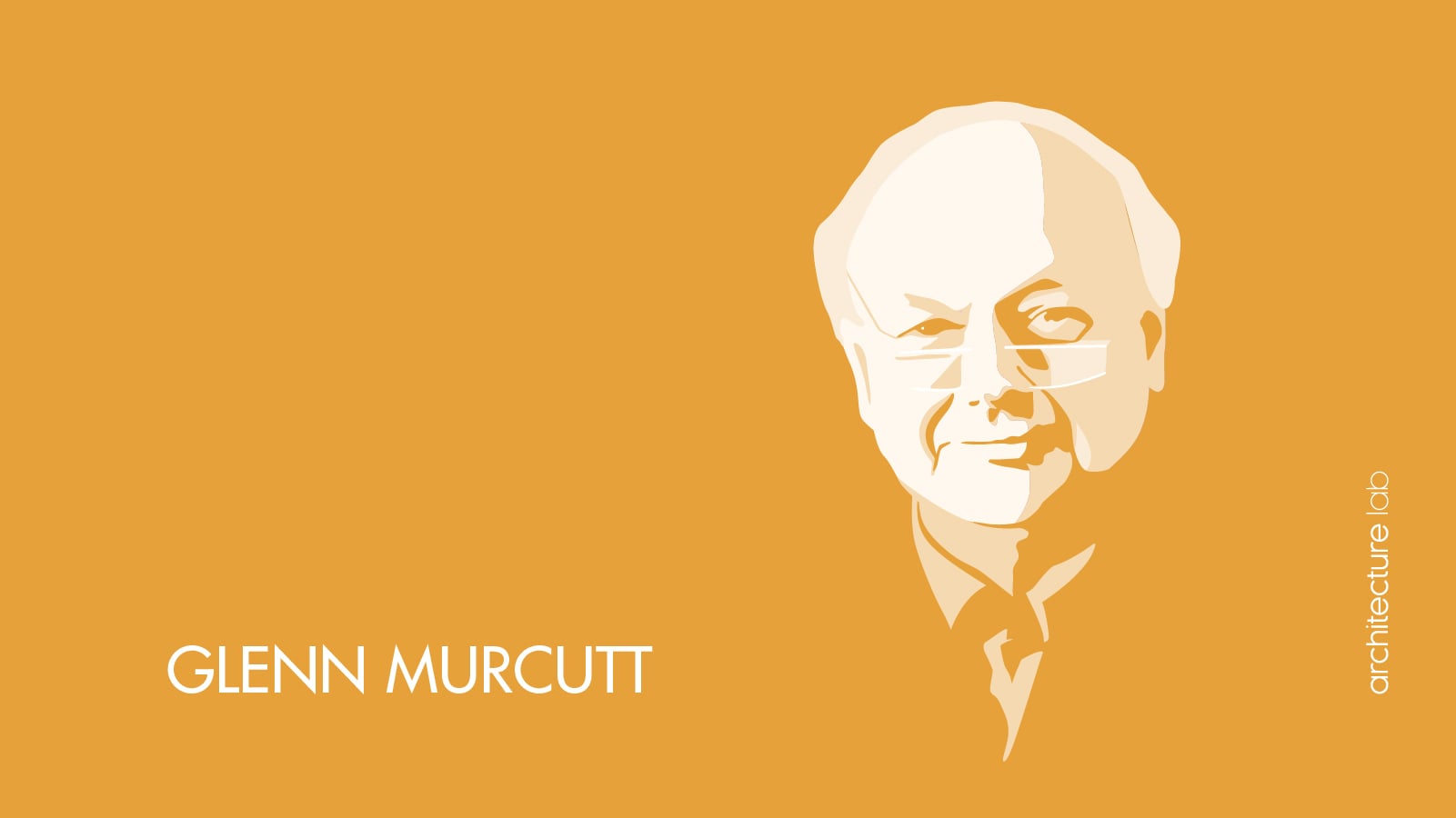
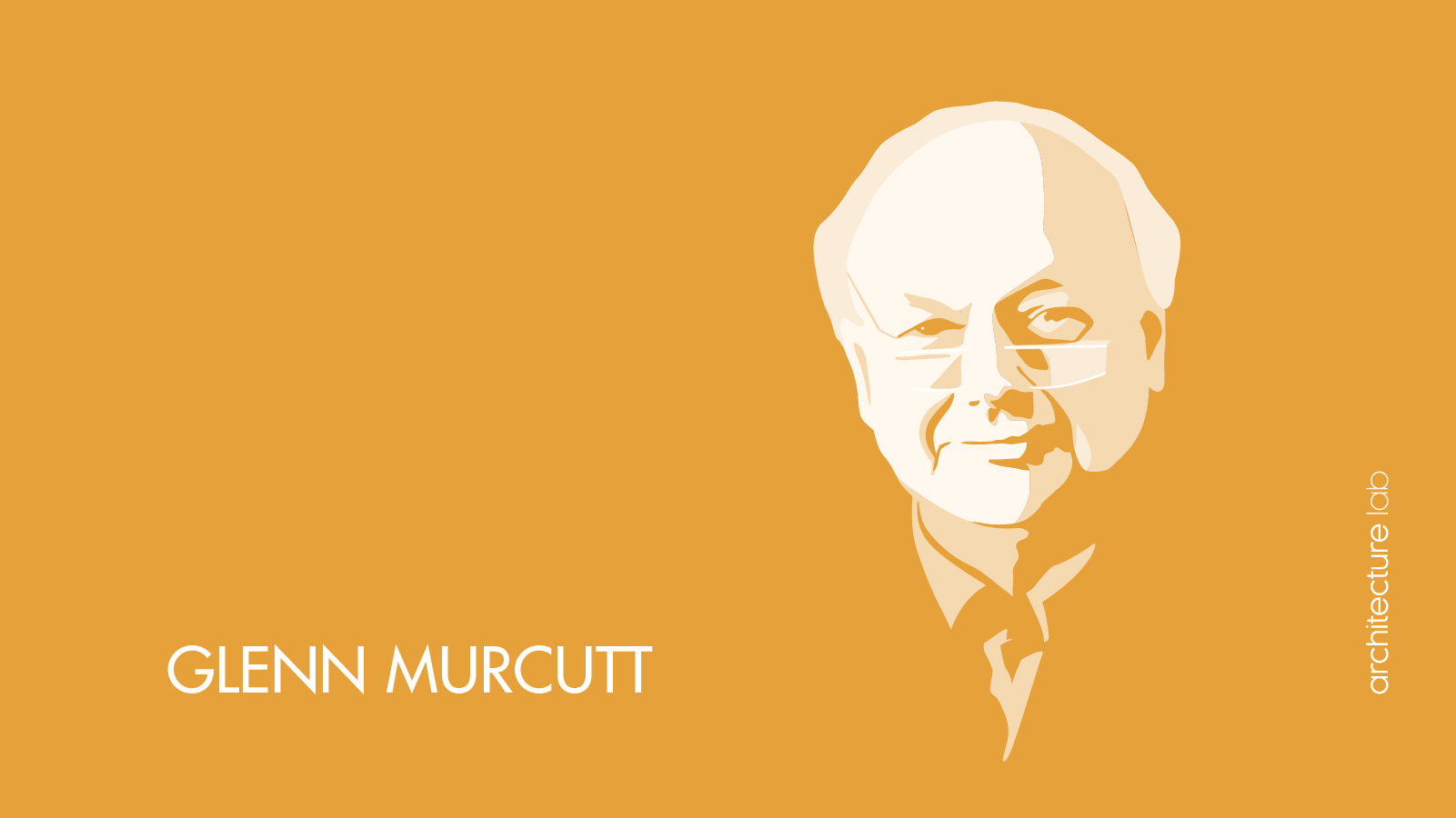
Glenn Murcutt, born in London in 1936 and raised in Australia, is an Australian architect known for climate-responsive design and critical regionalism. Murcutt received his architectural education at Sydney Technical College, where he completed his Diploma of Architecture in 1961. He founded his practice in 1969 and developed a body of work focused on lightweight, environmentally responsive buildings shaped by modernism, vernacular references, and passive strategies using corrugated iron, timber, glass, and concrete. Murcutt’s main accomplishment is showing that small-scale, climate-responsive architecture attains international attention, a contribution for which he was awarded the Pritzker Architecture Prize in 2002. His portfolio includes the Marie Short House in Kempsey, the Magney House at Bingie Point, the Marika-Alderton House in East Arnhem Land, the Simpson-Lee House in the Blue Mountains, the Arthur and Yvonne Boyd Education Centre at Riversdale, and the Australian Islamic Centre in Melbourne. Murcutt influenced architectural discourse by establishing climate and place as primary design determinants through a solitary practice without a large office, shaping how architects and schools apply passive environmental strategies in residential and public buildings. His career has been free of notable controversy apart from early debate regarding the scale of his work. Murcutt designed climate-responsive houses, selected public buildings, and collaborations such as the MPavilion in Melbourne in 2019 and the Cobar Sound Chapel in 2022. With an output of roughly thirty built works, his practice emphasizes precision, environmental focus, and regional grounding. His lectures, interviews, and the Glenn Murcutt Master Class inform students studying passive strategies, modular plans, and operable facades. Murcutt’s legacy is the demonstration that environmental response, regional knowledge, and modest building means produce architecture with continued relevance.
- Who is Glenn Murcutt?
- What is Glenn Murcutt’s great accomplishment?
- What are Glenn Murcutt’s most important works?
- 01. Marie Short House (Kempsey, NSW, 1974–75; altered 1980)
- 02. Magney House (Bingie Point, NSW, 1982–84)
- 03. Marika-Alderton House (Yirrkala, NT, 1991–94)
- 04. Simpson-Lee House (Blue Mountains, NSW, 1988–93)
- 05. Arthur and Yvonne Boyd Education Centre (Riversdale, NSW, 1996–99)
- 06. Australian Islamic Centre (Newport, VIC, 2006–2016)
- What awards and honors has Glenn Murcutt received?
- Who are the most famous architects in modern history besides Glenn Murcutt?
- What did Glenn Murcutt mostly design?
 “Any work of architecture that exists or has a potential to exist is there to be discovered.” Glenn Murcutt © Anthony Browell
Who is Glenn Murcutt?
Glenn Murcutt is an Australian architect born on July 25, 1936, in London to Australian parents, recognized for his climate-responsive buildings. Murcutt spent his early childhood in Papua New Guinea before growing up in Sydney, which exposed him to indigenous vernacular structures and the Australian environment that shaped his designs. He studied architecture in Sydney, graduating in 1961, and founded his own practice in 1969. Murcutt works alone without a permanent staff, taking on a limited number of projects each year. Over the decades, Murcutt has designed private houses and a select number of public buildings across Australia, characterized by simplicity, lightness, and attention to nature. Murcutt is the only Australian to have won the Pritzker Architecture Prize in 2002, and his approach has made him a significant figure in sustainable modern architecture.
 “Simplicity is the other side of complexity.” Glenn Murcutt © Anthony Browell
What type of architecture does Glenn Murcutt represent?
Glenn Murcutt represents an approach to architecture described as critical regionalism, a modernist style rooted in local climate, landscape, and building traditions. Murcutt’s buildings emphasize environmental response and use lightweight materials like corrugated iron, wood, and glass. Murcutt designs each structure to fit its place, responding to sun, wind, and terrain. Murcutt’s work is an example of sustainable design: his houses open to the elements with adjustable screens and louvers, use extended eaves for shade, and incorporate rainwater collection and natural ventilation to eliminate mechanical cooling. Murcutt’s architectural style blends modern simplicity with ecological principles, demonstrating that contemporary architecture achieves functional performance and a connection to its setting.
 “The nature of the place should define a particular design.” Glenn Murcutt © Timothy Burgess
What is Glenn Murcutt’s great accomplishment?
Glenn Murcutt’s great accomplishment is demonstrating that small-scale, environmentally focused architecture attains recognition and influence in the modern era. His dedication to climate-responsive buildings in Australia, including rural houses, earned him the Pritzker Architecture Prize in 2002. This made Murcutt the first Australian laureate of the Pritzker Prize and reflected how his “touch the earth lightly” approach gained international attention. Murcutt influenced thinking in architecture by showing that solutions to local conditions hold significance alongside large urban projects. He set an example that sustainability and regional focus operate as avenues for innovation. Through this work, Murcutt influenced architects to value environmental response and human scale in contemporary design.
 © Anthony Browell
  © Anthony Browell
What are Glenn Murcutt’s most important works?
Glenn Murcutt’s most important works range from private homes to community facilities and reflect his principles of light-touch, climate-responsive design. His portfolio includes the Marie Short House in New South Wales, an early project that shaped his vernacular approach; the Magney House at Bingie Point with its inverted roof for rainwater collection; the Marika-Alderton House in Arnhem Land, designed for an Aboriginal family with operable walls suited to the tropics; the Simpson-Lee House in the Blue Mountains, which advances Murcutt’s ideas of using water and air for cooling; the Arthur and Yvonne Boyd Education Centre at Riversdale, a collaborative project aligning architecture with its setting for art education; and the Australian Islamic Centre in Melbourne, a mosque applying Murcutt’s design principles on a larger civic scale.
01. Marie Short House (Kempsey, NSW, 1974–75; altered 1980)
Marie Short House in Kempsey, New South Wales, was one of Glenn Murcutt’s early projects and established themes of his later work. This farmhouse, originally built for Marie Short and later owned by Murcutt, consists of two rectangular pavilions set slightly apart, one for living areas and one for bedrooms. Murcutt raised the structure off the ground on steel posts to protect against periodic floods and to reduce disturbance to the land. Local hardwood timber was used for the framing and corrugated iron for the roof and cladding, referencing the vernacular of rural Australian sheds. The design includes wide eaves and adjustable louvered windows that keep the house cool in the hot climate without mechanical air conditioning. The plan is straightforward and modular, designed so the building could be disassembled and moved if necessary. Marie Short House became a precedent for Murcutt’s architectural approach, showing that dwellings using simple materials respond effectively to their environment.
 © Anthony Browell
  © Anthony Browell
  © Brett Boardman
  © Anthony Browell
  © Anthony Browell
  © Anthony Browell
  © Anthony Browell
  © Anthony Browell
  © Glenn Murcutt
02. Magney House (Bingie Point, NSW, 1982–84)
Magney House at Bingie Point, New South Wales, is one of Glenn Murcutt’s residential designs and is noted for its roof form and off-grid sustainability features. Sited on a coastal hill facing the Pacific Ocean, the house was designed to withstand strong winds and sun while capturing limited rainwater. Murcutt devised an inverted corrugated iron roof that collects rainwater into a central gutter for storage, a critical resource for the location. This roof creates high clerestory windows that vent hot air through natural convection. The house is oriented with long elevations facing north–south and uses wide eaves, screened verandas, and concrete block trombe walls to regulate temperature, shading interiors in summer and admitting winter light. Constructed of steel, glass, and corrugated metal, Magney House presents a low-profile pavilion. Inside, living spaces and bedrooms are arranged linearly with a breezeway and courtyard to support cross-ventilation. Magney House is cited for its passive solar design and shows how architecture addresses environmental conditions with efficiency.
 © Anthony Browell
  © Anthony Browell
  © Anthony Browell
  © Anthony Browell
  © Anthony Browell
  © Anthony Browell
  © Anthony Browell
  © Anthony Browell
  © Anthony Browell
  © Anthony Browell
  © Glenn Murcutt
  © Glenn Murcutt
03. Marika-Alderton House (Yirrkala, NT, 1991–94)
Marika-Alderton House in East Arnhem Land, Northern Territory, is a tropical dwelling that represents Glenn Murcutt’s responsive design in an Indigenous context. Designed for a Yolngu Aboriginal artist and her family, the house sits on stilts above the ground and has a long rectangular form under a corrugated metal roof. The roof’s overhangs shield the building from sun and monsoonal rains, while the elevated floor catches breezes and limits pests. The primary feature is its fully operable facade: the walls are wooden panels and slats that open outward, converting the interior into a ventilated pavilion. This allows occupants to ventilate and cool the house during hot days and close it at night or in bad weather. Murcutt incorporated cultural requirements into the layout so it accommodates family gatherings and the semi-outdoor lifestyle of the community. The use of corrugated iron, timber, and plywood combined with the adaptable spatial arrangement positions the Marika-Alderton House as a precedent of critical regionalism. It shows a direct response to local traditions and climate and is one of the studied examples of modern vernacular architecture in Australia.
 © Anthony Browell
  © Anthony Browell
  © Anthony Browell
  © Anthony Browell
  © Anthony Browell
  © Anthony Browell
  © Glenn Murcutt
  © Glenn Murcutt
  © Glenn Murcutt
  © Glenn Murcutt
  © Glenn Murcutt
04. Simpson-Lee House (Blue Mountains, NSW, 1988–93)
Simpson-Lee House at Mount Wilson in the Blue Mountains of New South Wales is a retreat where Glenn Murcutt advanced his work with water, light, and landscape. Designed for a retiring couple on a forested mountain site, the house is composed of two parallel pavilions separated by an open courtyard and a shallow reflecting pool. This pool functions as a thermal device; as breezes move across the water, cooler air is drawn into the living spaces through passive cooling. The building is constructed from concrete block walls for thermal mass, slender steel columns, and corrugated metal roofing, with extensive glass louvers. The operable glass walls and louvers allow the house to open to mountain air and adjust interior conditions. Broad roof overhangs and adjustable screens regulate sunlight and maintain interior temperature across seasonal changes. Simpson-Lee House distilled ideas from Murcutt’s earlier projects, including Magney House, into a pared-down form. The house demonstrates how environmental design produces a clear architectural expression.
 © Anthony Browell
  © Anthony Browell
  © Anthony Browell
  © Anthony Browell
  © Anthony Browell
  © Anthony Browell
  © Anthony Browell
  © Anthony Browell
  © Anthony Browell
  © Anthony Browell
  © Glenn Murcutt
  © Glenn Murcutt
  © Glenn Murcutt
05. Arthur and Yvonne Boyd Education Centre (Riversdale, NSW, 1996–99)
The Arthur and Yvonne Boyd Education Centre at Riversdale, New South Wales, is a public commission in Murcutt’s career designed with architects Wendy Lewin and Reg Lark. Located on a hill overlooking the Shoalhaven River, this education retreat was conceived by Arthur Boyd as a place for students and artists to live and work in a rural setting. The design consists of long pavilion buildings connected by covered walkways, including a hall, dining facilities, studios, and dormitories for about thirty-two people. In keeping with Murcutt’s principles, the complex is oriented to frame views of the river valley and to catch breezes; large sliding doors and louvered panels allow the halls to open to the outdoors. The construction uses durable materials suited to the countryside, such as corrugated metal roofs, concrete block and brick walls, timber rafters, and glass. Deep roof eaves provide shade, and the layout separates sleeping, eating, and gathering areas into distinct wings for ventilation and comfort. By integrating the buildings into the landscape between open fields and bushland, the Boyd Education Centre maintains a clear spatial relationship with its setting. The project showed how Murcutt’s design approach applies to larger-scale communal architecture while retaining the focus on simplicity and environmental response.
 © Anthony Browell
  © Anthony Browell
  © Anthony Browell
  © Anthony Browell
  © Anthony Browell
  © Anthony Browell
  © Anthony Browell
  © Anthony Browell
  © Anthony Browell
  © Anthony Browell
  © Glenn Murcutt
  © Glenn Murcutt
  © Glenn Murcutt
06. Australian Islamic Centre (Newport, VIC, 2006–2016)
The Australian Islamic Centre in Newport, Victoria, is a mosque and community building that shows Glenn Murcutt’s approach to combining modern design with cultural requirements. Working with architect Hakan Elevli, Murcutt developed an unconventional mosque design that omits minarets and a dome. The mosque’s identity comes from its roof of ninety-six skylight lanterns set across the flat roof. These lanterns contain colored glass and are oriented to reflect sunlight into the prayer hall, producing illumination that references Islamic decorative traditions. The building is a low-rise rectilinear structure housing a prayer hall, classrooms and community facilities. It includes a central courtyard and water pools for ritual ablution, integrating functional aspects of Islamic practice. Materials include concrete, steel and glass, establishing clear construction lines. The design initially prompted debate for its departure from traditional mosque forms, but the building is recognized for establishing a sense of openness while meeting religious needs. The Australian Islamic Centre shows that Murcutt’s design principles, based on light and spatial clarity, extend to civic and religious architecture.
 © Anthony Browell
  © Anthony Browell
  © Anthony Browell
  © Anthony Browell
  © Anthony Browell
  © Anthony Browell
  © Anthony Browell
  © Anthony Browell
  © Glenn Murcutt
  © Glenn Murcutt
  © Elevli Plus
  © Elevli Plus
How did Glenn Murcutt contribute to architecture?
Glenn Murcutt has contributed to architecture by promoting a form of modern design that prioritizes environmental responsiveness, local context and simplicity. During a period dominated by large urban projects, Murcutt’s work directed attention to human scale and the relationship between a building and its setting. Murcutt developed techniques for passive heating and cooling in houses, including orientation, cross-ventilation and shading systems, which have been adopted in sustainable architecture. By delivering buildings attuned to their sites, Murcutt influenced architects to consider climate and terrain as starting points in design. Murcutt showed that an architect maintains relevance while operating outside major urban centers and without a large office. His involvement in teaching and the annual masterclass he leads has guided architects in learning how to design with a light environmental impact. Murcutt’s career expanded modern architecture by showing that innovation and influence emerge from restraint, environmental response, and regional knowledge.
What awards and honors has Glenn Murcutt received?
Glenn Murcutt has received awards and honors for contributions to architecture, including:
- Pritzker Architecture Prize (2002) – International architecture prize acknowledging Murcutt’s work and approach.
- Australian Institute of Architects Gold Medal (1992) – Award for service to architecture in Australia.
- Officer of the Order of Australia (1996) – AO honor for service to environmental design and architecture.
- Alvar Aalto Medal (1992) – Award from Finland for contributions to contemporary architecture.
- AIA Gold Medal (2009) – American Institute of Architects honor for Murcutt’s influence on the field.
- Praemium Imperiale for Architecture (2021) – Award from the Japan Art Association for lifetime work in architecture.
Murcutt has received additional awards including the Richard Neutra Award for teaching in 1998, the Thomas Jefferson Medal for Architecture in 2001, and the Kenneth F. Brown Asia Pacific Culture and Architecture Award in 2003.
 Glenn Murcutt, recipient of the 2002 Pritzker Architecture Prize. © The Pritzker Architecture Prize
Did Glenn Murcutt change the architecture industry?
Glenn Murcutt changed architecture by showing how design grounded in local climate and culture attains international attention. His work encouraged the industry to expand its definition of architectural criteria to include sustainability and context. By receiving global awards for modestly scaled projects in Australia, Murcutt challenged the view that only large buildings shape progress. His emphasis on working with climate influenced architects and schools to integrate passive design principles and environmental awareness into practice. Murcutt’s approach as a solitary architect, committed to each project, presented an alternative to the corporate firm model and led some designers to prioritize project quality. The rise of green architecture and regional design strategies is partly connected to the example set by Murcutt’s work.
Was Glenn Murcutt ever controversial in any way?
Glenn Murcutt has avoided controversy throughout his career and maintained a professional reputation. He works on small projects and avoids publicity, so he has not entered the public disputes that follow some designers. Early in his international recognition, debate arose in architectural circles about his 2002 Pritzker Prize, with some observers noting that an architect practicing in Australia and focused on houses received the award. This debate centered on the values of the prize. Some of Murcutt’s projects prompted local discussion, such as initial skepticism toward the Australian Islamic Centre by traditionalist community members, but these issues were resolved during the project’s completion. Murcutt’s personal life and professional conduct have been free of notable conflict. Apart from generating discussion about architectural priorities, Glenn Murcutt’s career has been free of controversy.
Who are the most famous architects in modern history besides Glenn Murcutt?
Aside from Glenn Murcutt, Richard Rogers, Frank Gehry, and Zaha Hadid are architects who shaped modern architecture. Rogers (British, 1933–2021), a contemporary of Murcutt, worked in high-tech architecture and produced projects such as the Centre Pompidou in Paris with Renzo Piano and the Lloyd’s Building in London. Rogers received the Pritzker Prize in 2007. Gehry (Canadian-American, born 1929) developed a deconstructivist approach with projects including the Guggenheim Museum Bilbao, the Walt Disney Concert Hall in Los Angeles, and the Dancing House in Prague. Gehry received the Pritzker Prize in 1989. Hadid (Iraqi-British, 1950–2016), the first woman to receive the Pritzker Prize in 2004, introduced curvilinear forms and produced works such as the London Aquatics Centre, the Guangzhou Opera House, and the Heydar Aliyev Center. Beyond these architects, the field includes figures identified by the Architecture Foundation across career stages. Among established architects are David Adjaye (British-Ghanaian, born 1966), known for the Smithsonian National Museum of African American History and Culture in Washington, D.C., and Alison Brooks (Canadian-British, born 1962), known for the housing project Accordia in Cambridge. In the mid-career group are Amanda Levete (British, born 1955), designer of the MAAT museum in Lisbon; Sadie Morgan (British, born 1969), associated with the regenerated Hastings Pier; and Alex de Rijke (Dutch-born British, born 1960), noted for timber construction work. Emerging architects include Asif Khan (British, born 1979), designer of the Coca-Cola Pavilion at the 2012 London Olympics; Mary Duggan (British, born 1972), associated with the Garden Museum in London; David Kohn (British, born 1972), designer of the Skyroom pavilion; and Hikaru Nissanke (British-Japanese, born 1985) of OMMX. These architects, along with earlier twentieth-century figures such as Le Corbusier (Swiss-French, 1887–1965), Frank Lloyd Wright (American, 1867–1959), and Louis Kahn (American, 1901–1974), represent the breadth of architectural work beyond Murcutt’s contributions.
What did Glenn Murcutt mostly design?
Glenn Murcutt mostly designed low-rise, environmentally responsive buildings, and his work falls into several categories:
- Climate-Responsive Houses: The majority of Murcutt’s projects are private houses and rural dwellings tailored to the Australian climate. These residences often feature lightweight structures, tin roofs, operable louvers, broad verandas, and open-plan layouts that connect indoor and outdoor living. Murcutt’s houses, such as the Marie Short House, Magney House, and Simpson-Lee House, use orientation, cross-ventilation, and shading to maintain comfort.
- Public and Community Buildings: MMurcutt completed a small number of public projects that extended his approach to community use. These include a museum and visitor center in Kempsey built in 1982, the Arthur and Yvonne Boyd Education Centre in 1999, and the Australian Islamic Centre completed in 2016. In these works, Murcutt applied his principles on a larger scale by maximizing light and ventilation, addressing the landscape setting, and creating spaces that support social use while remaining energy-efficient.
- Collaborative & Experimental Works: Later in his career, Murcutt engaged in design collaborations and experiments. He was the architect for the 2019 MPavilion in Melbourne, a temporary pavilion that expressed his ideas in a small-scale structure. He partnered with composer Jon Rose to design the Cobar Sound Chapel completed in 2022 in New South Wales, a sound-art space that reuses a former water tank as an architectural installation. These projects show Murcutt’s range and his interest in formats outside conventional building types.
Although Murcutt’s output is limited, with on the order of thirty built works, each project reinforces a consistent design approach. By working within Australia, he maintained a focus on local context. Through books, exhibitions, and teaching, his ideas reached a wider audience. As of the mid-2020s, Murcutt remains active in architectural discourse, and his work continues to guide those interested in sustainable, regionally grounded design.
Where did Glenn Murcutt study?
Glenn Murcutt studied architecture in Sydney, Australia. He attended Sydney Technical College, now part of the University of New South Wales, where he completed his Diploma of Architecture in 1961. This education provided Murcutt with a foundation in modernist design principles and construction techniques. Prior to his tertiary studies, Murcutt completed secondary schooling at Manly Boys’ High School in Sydney after his family moved from Papua New Guinea in 1941. At Sydney Technical College, he was introduced to international modernist works through coursework and developed interest in architects such as Ludwig Mies van der Rohe. The combination of technical education and exposure to modernist ideas prepared Murcutt to begin his career; after graduating, he worked at Sydney architecture firms to develop his skills before establishing his own practice in 1969.
Did Glenn Murcutt have any famous teachers or students?
Glenn Murcutt did not have globally known professors in school, but he learned from Australian architects and was informed by prominent figures through literature. During his studies and early career in Sydney, Murcutt worked with or was taught by local modernists such as Neville Gruzman, Ken Woolley, and Bill Lucas, practitioners who emphasized organic architecture suited to the Australian context. Their guidance, along with Murcutt’s study of architects such as Mies van der Rohe and Frank Lloyd Wright, shaped his design approach. As a teacher and mentor, Murcutt’s influence has been broad rather than centered on one protégé. He was a part-time design tutor at the University of Sydney in the 1970s and later served as a visiting professor at universities in the United States, Europe, and Asia, sharing his approach with students. Many architects who did not work directly under Murcutt have cited him as an influence through his lectures and writing. In Australia, contemporaries and younger architects such as Richard Leplastrier and Peter Stutchbury, both of whom collaborated with Murcutt in educational programs, are regarded as aligned with similar environmentally responsive design ideas, though they were not formally his students. Through the annual Glenn Murcutt Master Class, an international architecture workshop he co-founded in 2001, Murcutt has taught participants from various countries. Rather than producing formal students, Murcutt’s educational legacy is the network of architects who have been influenced by his principles and work.
How can students learn from Glenn Murcutt’s work?
Students learn from Glenn Murcutt’s work by analyzing his design principles and applying them in projects that focus on climate, context, and simplicity. Studying Murcutt’s built works through photographs, drawings, and site visits is useful. By examining houses such as the Marika-Alderton House or Simpson-Lee House, students observe how Murcutt positions buildings to catch breezes, how he uses overhangs and screens to control sunlight and how indoor spaces connect with outdoor terraces or verandas. Sketching these designs or building models reveals the logic behind their form and construction. Reading Murcutt’s interviews and lectures provides information on his methods. He discusses why he chooses materials such as corrugated metal or plywood, how he plans for rainwater and drainage, and his principle of touching the earth lightly. Students note how he achieves thermal comfort through design strategies rather than mechanical air-conditioning. A practical way to learn from Murcutt is to test design problems that use his constraints. A student may design a small studio without air-conditioning to use ventilation and shading based on Murcutt’s methods. Participation in programs such as the Glenn Murcutt Master Class or other workshops focused on sustainable design offers direct experience with his approach. In these settings, students collaborate and receive feedback aligned with Murcutt’s teaching. Learning from Glenn Murcutt’s work involves understanding the relationship between architecture and climate. Students are encouraged to prioritize context, sustainability, and clarity by understanding climate, terrain, and culture; designing for energy efficiency and low environmental impact; and reducing designs to essential functional elements. By engaging with these ideas, future architects extend Murcutt’s influence through environmentally responsive design.