
I’m not totally sure how to listen to music anymore. Putting on my bluetooth headphones and pressing play on Spotify—I can’t tell if this is music I chose, or that was selected for me by some algorithm; I’m not certain if I’m enjoying the music, or if it just creates a comfortable cocoon to tune out the noise of the world and other people. With music in my ears, I’m exempted from making eye contact with strangers. It’s a relief, in some ways, but also a loss. I miss the days where crowds would gather around buskers, when a guy with a boombox lit up a public space like a DJ. I miss the quiet solidarities of making eye contact with fellow transit passengers when someone’s breakup was happening loudly two seats down. In the days before the iPhone, iPod, or Walkman, there was the radio; even when listening alone, there was a certain warmth in knowing that there were thousands of other people tuning in with you. When I think back to that, wearing headphones doesn’t just feel lonely—it feels incorrect, like music was meant to do so much more than keep me tucked away.
The interiors of Café Tondo in Los Angeles, California, were designed by Aunt Studio and Mouthwash Studio.
But you don’t have to be alone in your music or swallow whatever the algorithm feeds you, as listening bars have been on the rise in recent years in cities across the United States and abroad. In Los Angeles’s Chinatown neighborhood, one such spot, Café Tondo, wants you to ditch your headphones. It opened in July last year in a squat, one-story building under elevated train tracks. Lined with red neon piping, the exterior looks almost eerie, like a Hopper painting set to the Twin Peaks theme. Inside, patrons sit at custom booths and small tables amongst moody lighting, minimalist Mexico City-inspired decor, and muted tones while music from a hi-fi system fills the room. Tondo is among the slew of new listening lounges that have become darlings of the global bar and restaurant scene: They’ve been billed as “analog sanctuaries,” a balm for booze-free Gen Z, and importantly, an “antidote to loneliness.” But beyond these sweeping statements, the listening bar’s current popularity can be attributed to our diminishing public life. Marketed to those who are seeking human connection, these lounges are a critique of our wired culture as an antisocial one; how we passively consume music is a sign that ambiance has become a substitute for culture.

The exterior of Café Tondo makes an impression with its bright-red neon lights.
The listening bar isn’t a new concept; its origins stem from Japan nearly 100 years ago and gained prominence in Tokyo’s post-World War II jazz scene. A recent Smithsonian magazine story on the rise of post-pandemic listening bars notes that the 1960s and ’70s revival of Japanese listening cafes, called ongaku kissa, was possible after the U.S. army left the country in the 1950s, abandoning record collections and circuit boards that Japanese DJs turned into hi-fi sound systems for spinning their curated (and often rare) vinyl selections in intimate environments. Citing Tokyo-based filmmaker Nick Dwyer’s 2024 documentary A Century in Sound about Japan’s long-standing kissa culture, the Smithsonian article highlights the spiritual side of the listening bar. “Records have a soul” in Japanese culture, says Dwyer; listening is a way to commune with those who made the record, and its history. While many Japanese listening cafes sell food and drinks, the main purpose is for listening in the presence of others.

Masako: Jazz & Coffee in Tokyo, Japan, is one of the city’s oldest kissa (jazz cafe).
Like kissa of the past, Tondo serves coffee and pastries in the daytime and small plates at night, but beyond their food and beverage program they are foremost a social space. It’s a project by Mouthwash Studio, a visual communication design firm with clients like Nike, The North Face, and Thom Browne with a mission, per its website, to “influence culture.” Tondo cofounder Abraham Campillo says that four years after starting their practice, the team realized that in order to influence culture, they have to participate in culture—which, frankly, isn’t especially encouraged in our day-to-day exchanges. “We’re spending a lot of time on computers,” Campillo says, “even if we’re interacting with other people, it’s on Zoom or Google Meets.” In thinking through what Tondo could be, the most important aspect of the team’s vision was an ability to create a social space that would bring people together based on a shared love of music. They found a former tire shop and collaborated with Aunt Studio to create the cafe interior; handcrafted furniture by OMBIA Studio offers a variety of seating spaces like formal tables and chairs (great for their chess evenings), high-top bar seats, and cozy alcoves with pint-size maneuverable stools; an industrial, high-end sound system by Pavilion Audio Systems carries music indoors and out to their patio.
Themed nights at Tondo—Bolero on Tuesdays, guest DJs on Saturdays, jazz on Sundays—attract audiences for a shared purpose: listening to a genre they love or are curious about. “Tuesdays, you’ll see more of a Latino audience: people bring their parents, they’ll bring their mom for their birthday; or you’ll see a daughter with her dad,” Campillo says. “They might have coffee or dinner together, and it’s really, really wholesome.” Jazz audiences, he adds, are a bit more diverse, while Saturday DJ nights bring out young people, filling the cafe and spilling into the street. The music becomes a conduit for communing, but the cafe’s success also points to the ways shared listening fills a need.
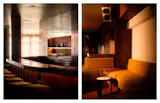
Public Records in Brooklyn, New York, has multiple spaces to enjoy music, including the Atrium, its restaurant and cocktail bar (left) and Upstairs, a lounge and listening space (right).
Richmond, Virginia-based musician and music critic Dash Lewis ties this evolution from kissa to a more social listening bar as specific to our current social conditions in which America’s loneliness epidemic has become a growing concern over the past decade. The listening bar, he says, has modernized in response to today’s isolation. “You want to be around people that have a similar viewpoint or similar interests, and that can spark good conversation or lead to new friendships; I think it’s part of the bigger conversation that we’re having in general about disappearing third spaces and the fracturing of culture.”
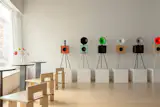
The minimalist listening room at Silence Please in Manhattan’s Bowery neighborhood.
The decline in “third spaces”—athletic leagues, religious or ethnic groups, union membership, and other non-work-related activities, and the various sites that host these gathering events—has been much beleaguered; it has become more difficult to connect with others based on loose, casual, but repeated ties. Music can be a remedy; the social culture around attending live music has long been a “loose ties” activity. But the cost of getting oneself out of the house to see a live band has become untenable for many: USA Today reported that the average cost to attend reached nearly $136 in 2024, driven by inflation, as well as fees from servicers like Ticketmaster. Like kissa of the past, listening bars provide access to a certain type of live music experience that might otherwise be unattainable.
Lewis recently visited All Blues, a new wave listening bar in Manhattan that opened in 2024; the music was loud over the high-end sound system (though it “sounded great,” he said), but there were conversations happening across the room. He realized that beyond its social value, the modern listening bar also provides a way for music-curious visitors to discover new bands or genres, which he considers a fraught task today. “Music journalism is struggling; there’s only a handful of places that publish criticism, and almost all of it is behind a paywall, so it’s not as accessible as it once was,” he explains. “Then you’ve got the people listening to music on some sort of streaming service, and probably the majority of those are Spotify listeners.”
London’s hi-fi bar, Space Talk, was designed by EBBA and Studio Charlotte Taylor.
The Spotification of music discovery was well-documented and investigated by music journalist Liz Pelly in her 2025 book, Mood Machine: The Rise of Spotify and the Costs of the Personal Playlist. In it, she expounds upon the mixtape as a way to deliver new music personally (often made and exchanged between friends in the 1970s and ’80s), and how that idea was essentially co-opted by Spotify’s marketing campaigns as early as 2013. As the company began hiring in-house playlist curators, those “discovery” playlists were monitored for skips, saves, and demographic data, and eventually paved the way for algorithmically-driven, passive listening. “Often, conversations about the streaming era center the way music has been financially devalued, but there is also a broader, harder-to-pin-down cultural devaluation that comes with streaming: the relegation of music to something passable, just filling the air to drown out the office worker’s inner thoughts as spreadsheets get finalized and emails get circled up on,” Pelly writes. It has resulted in a musical “flattening,” she contends, in which record labels often favor “lo-fi” genres that tend to do well as background noise.
“Lo-fi used to be more about the equipment that you were recording on,” explains Lewis. “If you were making music in your bedroom, and you had some Radio Shack mic and, like, a four track that was in various states of disrepair, you were making music that was low fidelity.” Today, the genre screams AI slop to him—which there’s plenty of on the streaming service.

Symbol Audio, a designer and manufacturer of “American-made furniture for living, working, and listening,” opened its Manhattan showroom in early 2026.
The listening bar promises, then, a “hi-fi” experience, characterized not just by the quality sound systems that pump music into the intimate spaces, but the intentional cultural encounters that take place when people listen to music together. Walker Tovin, managing director of Symbol, a designer and manufacturer of furniture that’s rooted in audio culture like vinyl LP shelving and lounge seating, has seen a resurgence of folks across the U.S. who are excited to practice what he calls intentional listening—bringing friends together, choosing an album, and allowing what’s heard to become the wellspring from which conversation flows.

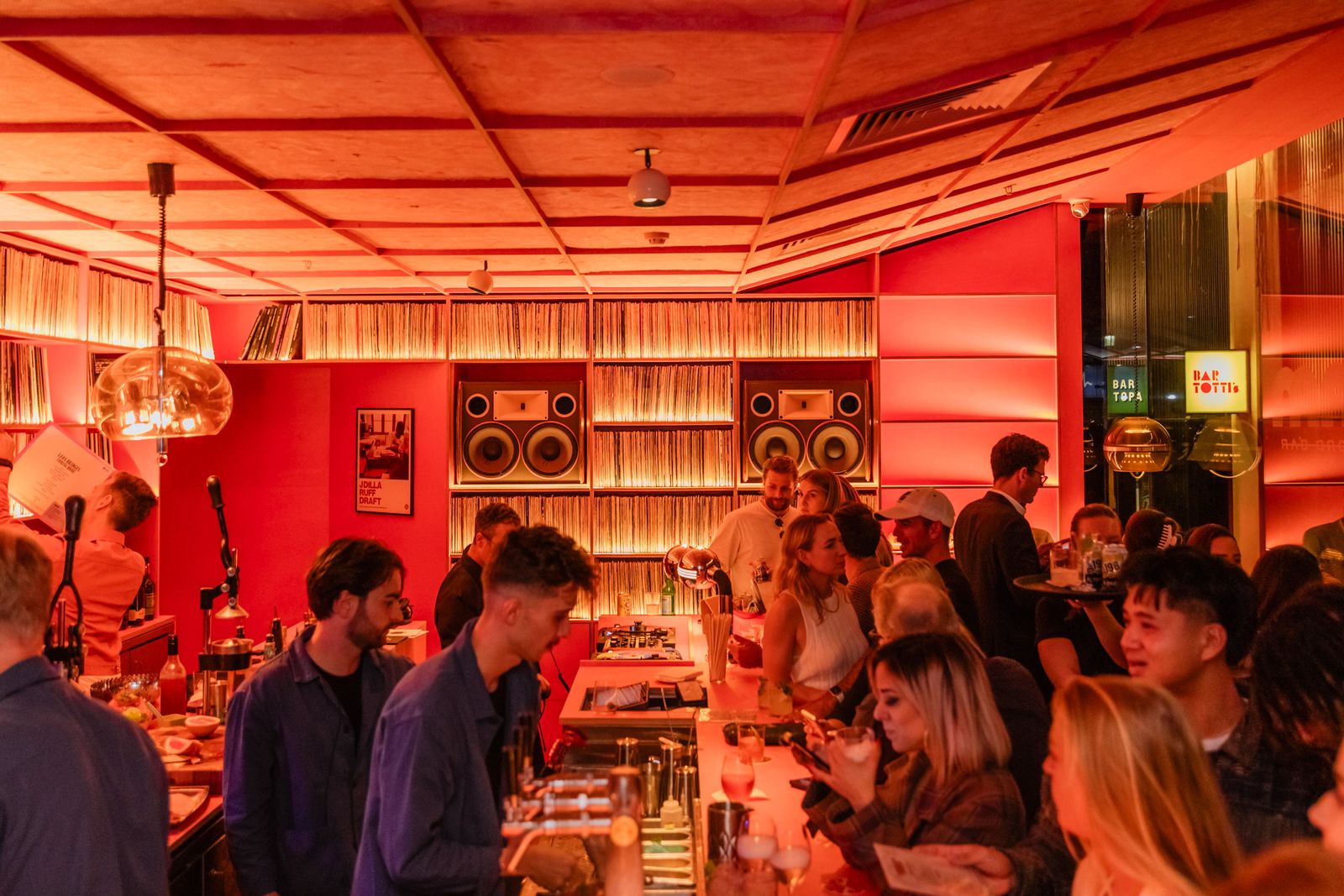
Looking at LB’s Record Bar in Melbourne, Australia, it’s plain to see that some listening bars lean into the retro associations that come with this kind of audio experience.
Many of his customers, he says, practiced intentional listening in the past, but have since put their record collections aside. “I would say half of our customers already had a collection and saw it come and go and are now saying, This is great. I’m going to go dig my records out of the storage unit and put them back in my living room,” he says. Other customers, he continues, have only recently discovered the practice. “We did lose something that’s really enjoyable about sitting down having a large-format piece of art in your hand and listening to a record in order,” Tovin says. “On a more social level, music is fun to listen to with people, and listening rooms are where you really engage with music in an intentional way, in a group of people.”
Lewis believes this is particularly true for some millennials and Gen Z listeners who might not have had a parent with a record collection and grew up inundated by streaming culture; they’re now finding that listening to music in community is a way to socialize while slowing down. Rather than soundtracking their every moment in their own deserted islands, trapped alone by their earbuds.
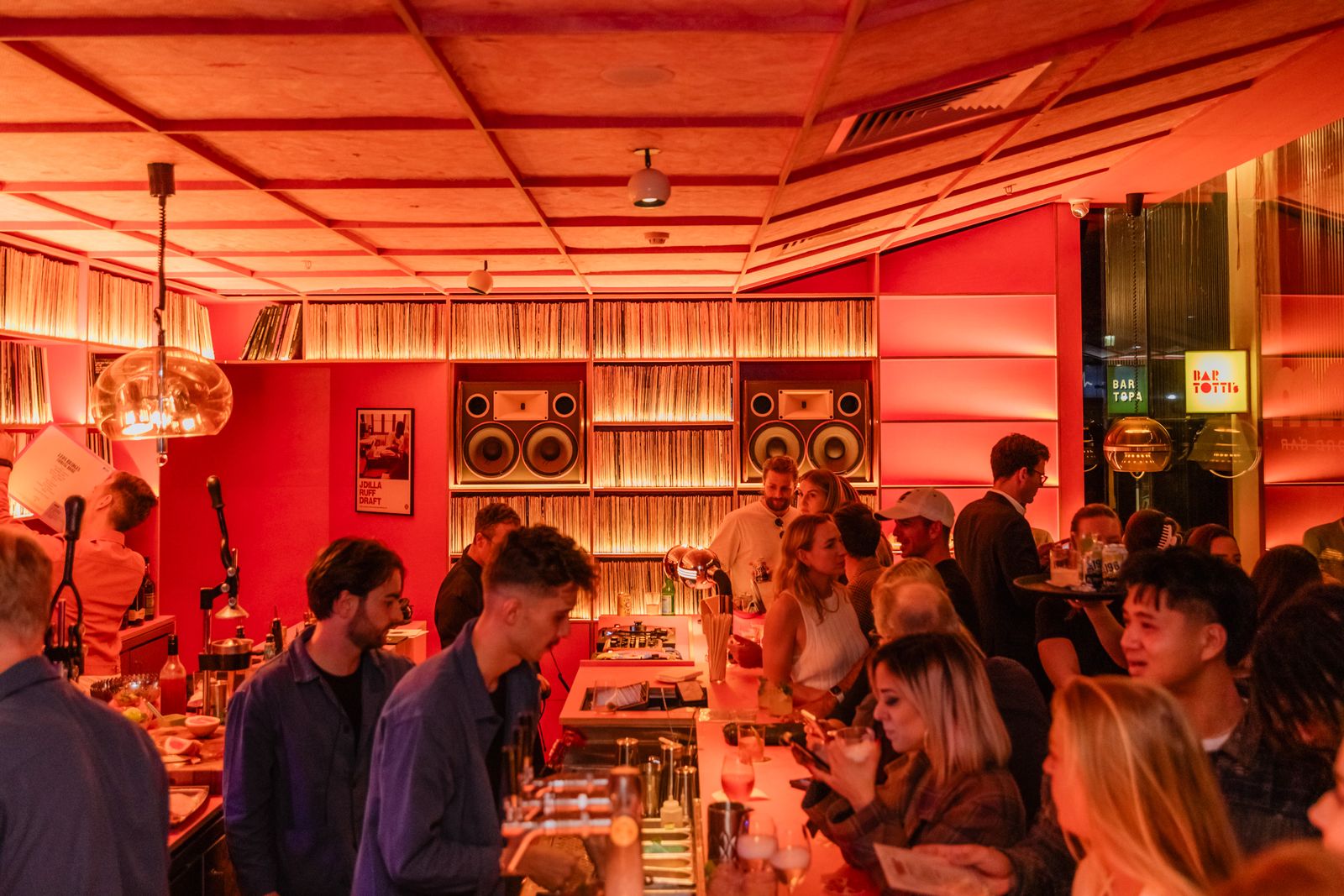
Top photo of patrons at JAM Record Bar in Sydney, Australia, courtesy Merivale