
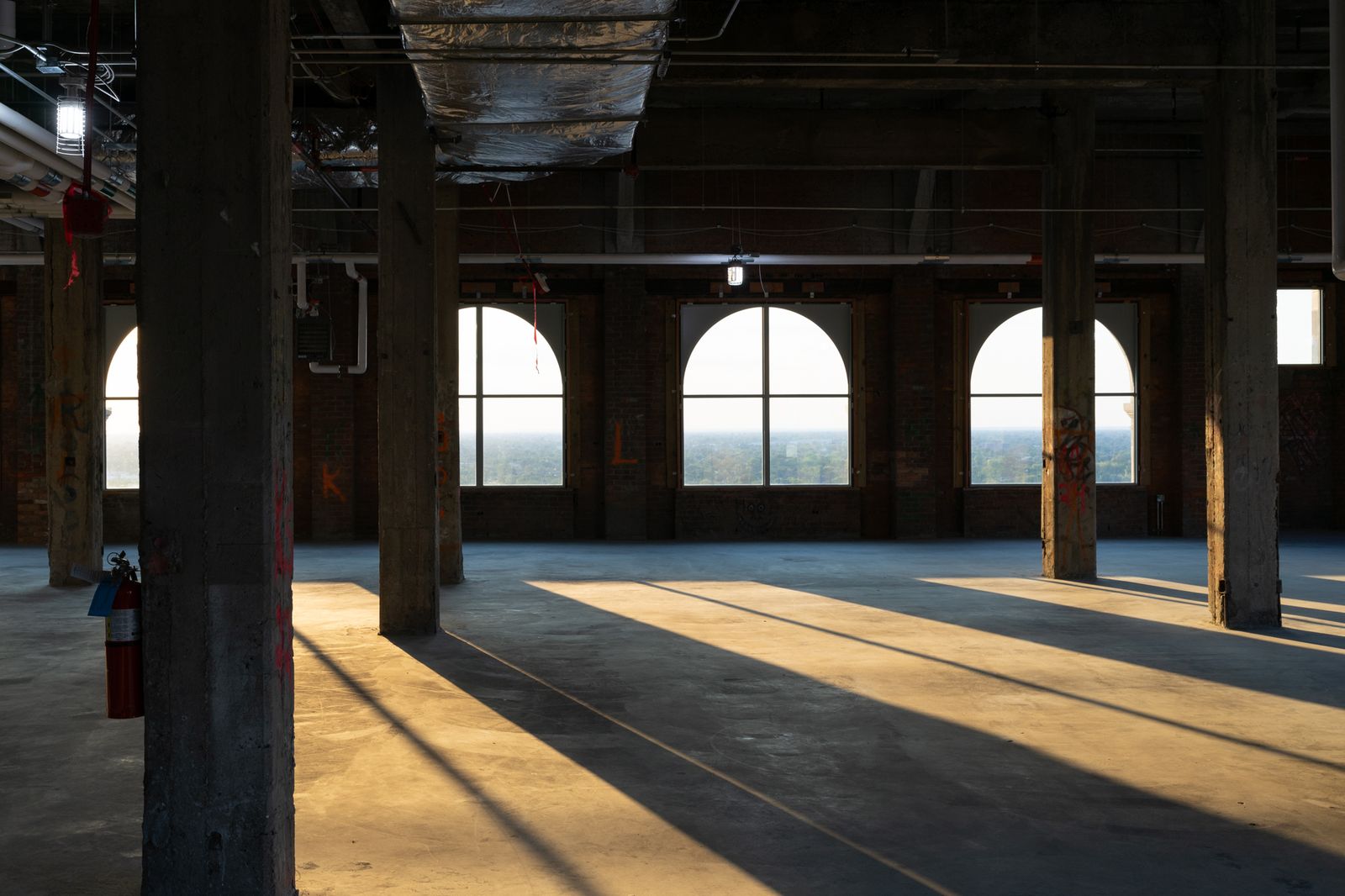
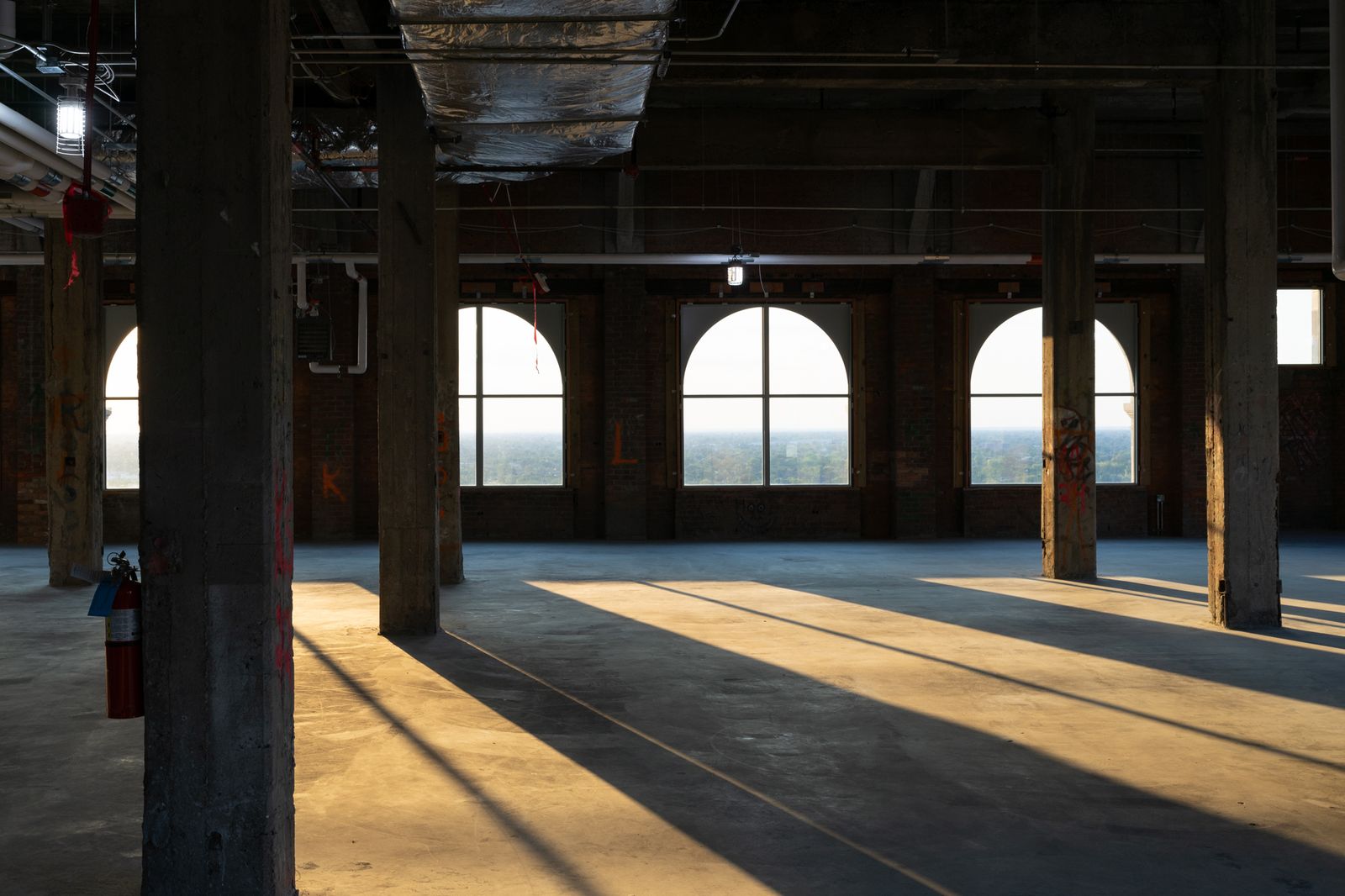
It’s a late afternoon in September, and long beams of golden light are gliding across the top level of Detroit’s Michigan Central Station. The space has been stripped bare and gutted down to its raw concrete subfloor, although graffiti still stains the pillars that run the length of the room. Through the freshly glazed, arched windows you can see the nearly complete Gordie Howe bridge to Canada and the downtown skyline, where a new SHoP Architects tower glimmers in the light of the setting sun.

From the top floor of Michigan Central Station, you can see the changing skyline of downtown Detroit. A Nomad hotel is slated to open on the level in 2027.

Ford Motor Company invested $950 million—and over 1.7 million hours of work—to restore Michigan Central Station over the course of six years.
Take the elevator 18 floors down, and you’ll find a building reborn—every finish, light fixture, and beaux arts detail restored in a nearly $1 billion renovation helmed by Ford. It’s kind of a miracle, and the metaphor tracks—in one wing, bits of the structure’s skin and bones are enshrined in plexiglass exhibit cases, like relics in the sepulcher of a grand cathedral.
A ground-floor gallery in Michigan Central Station displays bits of the building’s past salvaged over the course of the restoration.
When I last visited Detroit over a decade ago, Michigan Central was a derelict shell looming over the waterfront. Abandoned houses were on offer for $500, downtown felt largely deserted, and snow frosted over the crumbling remains of the Packard Automotive Plant—widely considered the world’s largest abandoned factory. The city’s ailing condition was the result of decades of decline caused by financial mismanagement, disruptive shifts in the auto industry, and shortsighted leadership, which culminated in Detroit declaring bankruptcy in 2013.

Opened in 2024, The Shepherd is a cultural arts center set on the grounds of a century-old church in Detroit’s East Village.
Developed by Library Street Collective founders Anthony and JJ Curis, The Shepherd includes an art gallery, a public library, a bed and breakfast, a skate park, and a sculpture garden featuring works by Charles McGee.

Detroit Month of Design director Kiana Wenzell speaks at the opening of the Designing Detroit exhibition.
“Since becoming a UNESCO City of Design [in 2015], Detroit’s story has shifted toward one of resilience and creativity,” says Kiana Wenzell, the co-executive director of Design Core Detroit and director of Detroit Month of Design. “I moved downtown in 2004, shortly after Detroit saw the return of the casinos and stadiums. Back then, growth centered on big attractions. Now, we’re seeing a surge in cultural events, hospitality, and adaptive reuse—projects that feel more sustainable and community-driven.”
Launched in 2011, Detroit Month of Design isn’t anchored by a central event or a massive trade show. As I explored the city on a press trip (with lodging and transportation provided by Camron), I found a constellation of exhibitions, workshops, tours, and talks that cast a wide-ranging spotlight on Detroit’s deep design legacy, its recent transformation, and the designers, architects, entrepreneurs, artists, and makers who are shaping its future.

The exhibition showcased innovative work by Detroit-based designers in the fields of transportation, architecture, fashion, and product design.
“Detroit’s creative community is hot like fire,” says Wenzell. “There’s a strong spirit of collaboration—people are experimenting, forming partnerships, and gaining recognition both locally and globally.”
“What makes Detroit unique is its openness and accessibility. There’s room here to create and to fail, and a shared belief that design should reflect and improve the lives of everyone in our city.”
—Kiana Wenzell, director of Detroit Month of Design
Still, change brings challenges—and as the city grows and develops, longstanding residents are at risk of being pushed out by rising property values and a higher cost of living. While many designers, architects, and entrepreneurs I met expressed a sense of optimism, they also raised concerns about affordability, representation, and gentrification. Read on for their thoughts on how Detroit had changed, why the recent boom feels different, and where they see the city heading.
Bo Shepherd, Designer
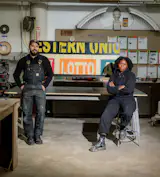
Founded by Kyle Dubay and Bo Shepherd in 2014, Woodward Throwbacks is a design studio that gives new life to salvaged materials sourced in Detroit.
Seventeen years ago, Bo Shepherd moved from the East Coast to Detroit to work as a car designer. “Back then, Detroit felt dark and mysterious, but also alive,” she recalls. “There was this creative tension and raw beauty everywhere. The architecture, the abandoned buildings, the history—you could tell there was a story worth learning and being part of.”
As she and her partner, Kyle Dubay, explored the city by bike, they found many abandoned objects lying on the streets—including old doors, broken tables, and raw wood—and they started salvaging materials to make furniture for their apartment. “What’s always stuck with me is the texture of those materials—the natural patina that can’t be replicated,” Shepherd notes. “Every layer of paint, every dent, tells a story. Highlighting that history and giving it a new purpose became part of our artistic practice.”
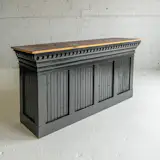
Inspired by old general store counters, Shepherd and Dubay crafted a black bar using pieces of salvaged wood, trim, and paneling.
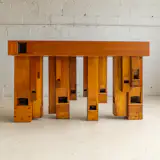
As they were deconstructing an old church, Woodward Throwbacks salvaged pieces of its pipe organ to create this entry table.
Their work picked up alongside the pace of construction in the city, and they began partnering with demo crews, homeowners, and contractors who were rehabilitating old properties. In 2014 they launched Woodward Throwbacks, which now offers custom furniture made from reclaimed materials and interior design and real estate development services.
Thinking back on how the city has changed, Shepherd points to the renovation of homes and historic structures as one of the biggest transformations. “Detroit was once the richest city in the world, and you can see that legacy in its architecture,” she says. “When people invest their time, money, and care into restoring those spaces, it shows a real respect for the city’s history. There’s a growing pride in Detroit’s identity, and you can feel that energy in every neighborhood that’s being revived.”
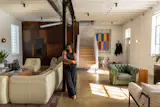
Over time, Woodward Throwbacks has expanded beyond product design to offer interior design and real estate development services.
“What’s driving this moment, in my opinion, is a mix of creative energy, small business growth, and local pride. There’s a sense of ownership and collaboration that feels genuinely homegrown.”
—Bo Shepherd, designer
Still, Shepherd recognizes new challenges facing the city. “Rising property values, the risk of displacement, and gentrification are very real conversations here,” she says. “My biggest hope is that more creative people continue to move into the city. We need artists, makers, and dreamers to actually live and build here, because that’s what keeps Detroit authentic. There’s still work to do to make that possible.”
Bilge Nur Saltik, Designer

Designer Bilge Nur Saltik cofounded the studio Form & Seek, and she currently runs her own practice and teaches product design at Lawrence Technological University.
Designer, maker, and educator Bilge Nur Saltik was born in Turkey, studied product design at the Royal College of Art in London, cofounded the women-led multidisciplinary studio Form & Seek, and has lived in the Metro Detroit area for the past 10 years. Her work focuses on the intersection of craft and technology, and over the years she’s explored mediums ranging from ceramics and glass to 3D printing.
I first saw Saltik’s work in the late aughts at the London Design Fair, so it was a happy surprise to catch up at Matéria Gallery, where she exhibited several pieces focused on connection and communication—an azure rug and a pair of laser-cut aluminum vases—with perforations and scalloped edges reminiscent of postage stamps.

Designer Bilge Nur Saltik showed her Postmark rug and vases in the Outside in the Middle exhibition at Matéria Gallery during Detroit Month of Design.
“Detroit’s creative community is incredibly strong and driven—there’s a real sense of purpose and collaboration among artists and designers,” Saltik says, noting what first drew her to the city. “I love how people often say, ‘Detroit is big enough for the world to know, but small enough for you to be known in it.’ That captures exactly what makes it special to me: It’s a place where creativity feels both expansive and deeply personal.”
“The city’s industrial heritage has shaped a culture of experimentation, where people are unafraid to work with their hands, test materials, and build from the ground up.”
—Bilge Nur Saltik, designer
Saltik moved to the city at a time when many buildings were abandoned, and over time she’s watched them open their doors as studios, galleries, and venues. “Detroit has seen waves of growth before, but this moment feels more grounded and sustainable,” she notes. “In the past, there were bursts of excitement that didn’t always reach the broader community. Now, the momentum is coming from within—driven by local creatives, small businesses, and grassroots organizations who are deeply invested in the city’s future.”
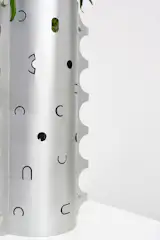
Saltik’s laser-cut aluminum Postmark vases have scalloped edges inspired by postage stamps.
Like Shepherd, Saltik points to affordability and accessibility as top concerns. “There are programs focused on affordable housing that aim to keep the city accessible to locals, but we need to see more of those initiatives in action,” she explains. “Lately, I’ve noticed that the rents developers expect for newly renovated spaces often don’t align with what artists, designers, or even galleries can sustain.”
“My wish for Detroit is to stay a little weird—to keep its edge, its curiosity, and its openness to the unexpected,” she says. “That spirit of experimentation is what makes this city so special.”
Chelsea Hyduk, Architect

Architect Chelsea Hyduk moved to Detroit to launch her own practice and build a home for her growing family.
Architect Chelsea Hyduk was born and raised in the suburbs of Detroit, and she went on to attend grad school at Columbia and work at SHoP Architects in New York City. She always dreamed of moving back home, although it wasn’t until the pandemic that she and her husband made the leap. “I always knew I’d move back to Detroit when I was ready to start my own practice,” she says. “With some experience under my belt, along with some incredible mentorship at SHoP, I felt ready to make the jump. So we moved…and then I got pregnant!”
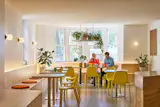
In 2025, architects Chelsea Hyduk and Chris Johnson teamed up to design the interior of Detroit’s Saturn Coffee shop. Set in a 1920s Albert Kahn building in the New Center neighborhood, the project pairs radiata pine plywood with vibrant furniture and stainless-steel countertops.
Hyduk says she was drawn by the sense of informality and collaboration in the city’s design community—as well as the opportunity to found her own firm and build a home for her growing family. “There aren’t really the ‘big firms’—especially in the architecture world—that cities like New York boast, so you can see people making jobs and positions for themselves,” she explains. “There’s a sense of authenticity that comes with this. As someone who works for myself, I feel wholeheartedly that I can stick to my values and desires and evolve them as I grow and change.”
“Growth in Detroit should be measured not just in new buildings, but in how well design serves the people who already call this city home.”
—Chelsea Hyduk, architect
Her values are firmly rooted in caring for her community—the home she’s built for herself and her extended family incorporates public green space and a pedestrian pathway, and she’s cofounded a nonprofit neighborhood Block Club to take on local infrastructure improvements like pocket parks.
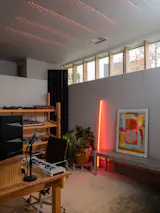
Hyduk designed a new music studio for DJ and producer Roni Amitai in 2025. The space is wrapped in modular, low-cost felt panels—some perforated and backlit—that improve acoustics.
“As Detroit grows, it faces challenges that are distinct from other cities, rooted in its history of disinvestment, vacant land, and uneven development,” Hyduk says. “Architects and designers need to think creatively and locally, working with what already exists and engaging directly with communities to shape spaces that reflect Detroit’s character and, in some ways, its scrappiness.”
Cyndia Robinson, Entrepreneur

Detroit local Cyndia Robinson founded Cure Nailhouse in 2019 as a nail studio and experimental artist residency.
Cyndia Robinson thinks back fondly on the times when she would wake up early to go to the nail salon with her mother as she was growing up in Detroit. “My mother, my aunts, and my grandmother all played a part in shaping how I view beauty and creativity,” she recalls. “I grew up watching them show up in the world with their hair and nails done, their heads held high, and their presence fully intact. To me, the nail salon was a space of bonding, storytelling, and expression.”
When she moved back home after college, Robinson was dismayed to find that many of the salons she grew up seeing, and the beauty schools that helped sustain them, had disappeared. “That was hard to witness,” she says, “especially in a city like Detroit, where Black culture is everywhere, and where Black women have led beauty, style, and innovation for generations. That moment of disconnect inspired me to create something new”

Set in the city’s Sugar Hill Arts District, Cure Nailhouse offers a range of services, including 2D and 3D nail art commissions and adornments.

The studio also hosts an artist in residence program which supports local and visiting nail artists.
In 2018, Robinson founded Cure Nailhouse as a nail studio, artist residency, learning space, and cultural hub. “It is my response to erasure, my commitment to community, and my belief that nail artistry deserves to be seen, respected, and invested in as a legitimate form of fine art,” she says.
“This is my love letter to Detroit, to the women who raised me, and to the beauty that Black women create every day.”
—Cyndia Robinson, founder of Cure Nailhouse
Sunlight streams in through a wall of floor-to-ceiling windows in the space, set in the Sugar Hill Arts District of midtown Detroit. Zieta Plopp stools stand at a metal metal bar backed by maroon shelving, where customers browse menus of cocktails and treatments—including 2D and sculptural 3D nail works, avant-garde adornments, and foot bath “immersions.” Sky-blue nail stations run along the glazed facade, while the “Soak Room” is an atmospheric, soothing, minimally lit space wrapped in earth tones.

A bar greets guests at the entrance and facilitates events and after-hours programming.
“We wanted it to feel familiar so guests immediately felt at ease, and it was important for the space to feel gender neutral,” says Duett Interiors founder Tiffany Thompson, who designed the space. “We know most salons tend to lean toward one type of consumer, but we wanted to create a place where everyone feels comfortable and inspired by design.”

Cure’s tiled foot bath stations are awash in soothing earth tones and atmospheric lighting.
Thinking back on how much the city has changed, Robinson says “There are beautiful moments of growth, creativity, and collaboration happening across neighborhoods and industries, but there is also tension around access, ownership, and representation. For many lifelong residents, especially Black Detroiters, the experience of the city today can feel like a fight to hold space in the midst of rapid development and gentrification.”
“You feel the weight of what has been lost, but also the energy of what is being rebuilt. It is not a blank canvas or a comeback story. Detroit has always been here, shaping culture and pushing boundaries, even when it was being overlooked or underestimated”
—Cyndia Robinson, founder of Cure Nailhouse
Above all else, Robinson emphasizes that growth must be intentional, and that development should not come at the cost of community. “We need to ensure that as the city transforms, it creates pathways for inclusion, equity, and representation,” she says. “That means centering the voices of legacy Detroiters, making sure affordable housing and small businesses remain top priorities, and protecting the cultural legacy that makes this city unique.”