
Transforming Toronto’s future means digging through its past – literally.
The anticipated 15.6 kilometre Ontario Line subway will transport riders across the city in 40 minutes — from Exhibition Station to Don Mills Road — and feature both underground tunnels and an elevated gateway.
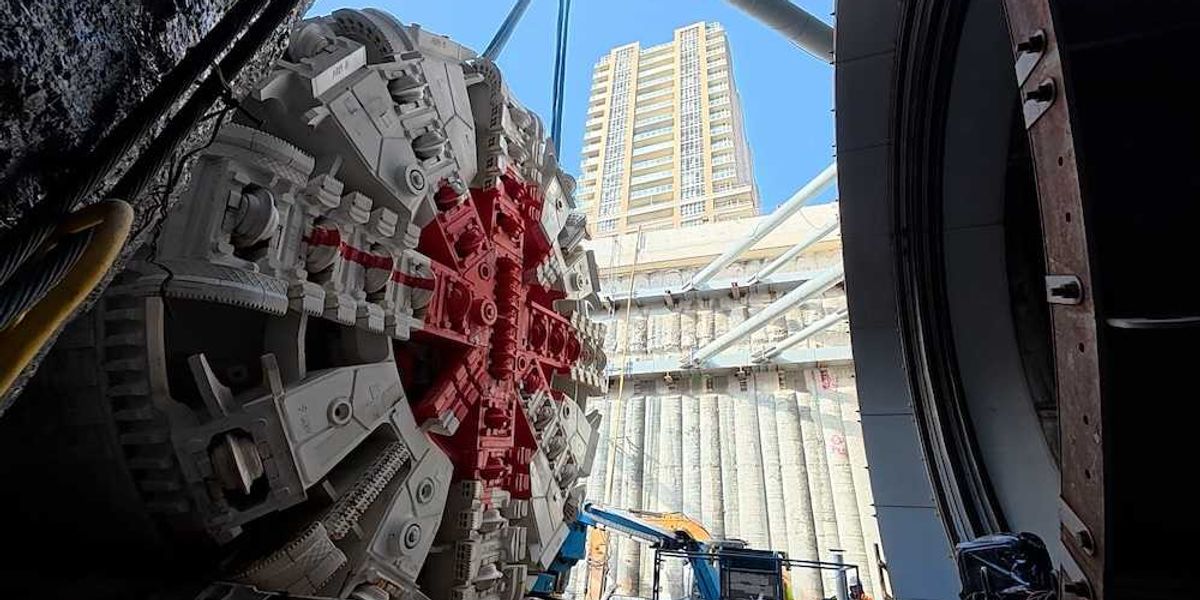
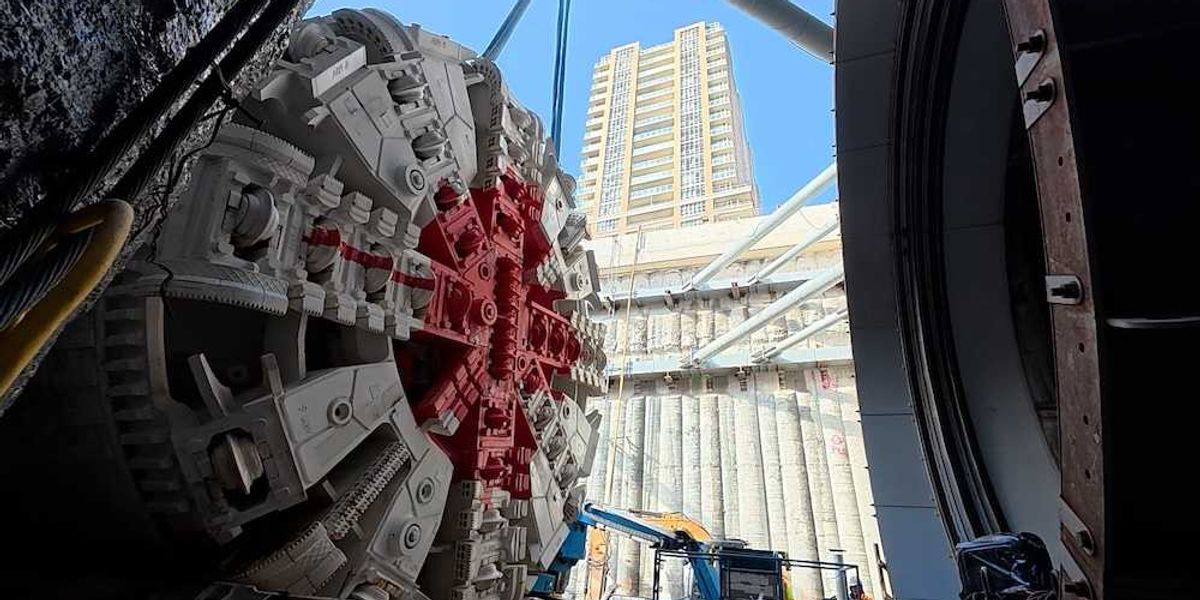
In April 2026, Metrolinx announced the Ontario Line’s tunnelling had officially begun. Two tunnel boring machines (TBMs) are digging the tunnel segment from the Exhibition grounds toward the Don Yard near the Don Valley Parkway (DVP) and Lakeshore Boulevard as they make way for the anticipated cross-city subway line.
Named Libby and Corkie (after Liberty Village and Corktown, the neighbourhoods marking the start and end of their journeys), these machines will plough through the downtown area, the first of two tunnelled sections. A separate, upcoming phase of tunnelling will run largely below Pape Avenue, starting just north of Gerrard Station and ending where Minton Place meets the DVP.
The massive TBMs can be as long as a football field and will dig as deep as 40 metres below the surface as they hollow out the city. According to Metrolinx, everything from sand, clay, and silt to boulders and bedrock can be found under Toronto’s streets, and each of these materials has different ground water and soil stability considerations.
But what exactly happens to all of the tons of soil, earth, and rock — known colloquially as “muck” — retrieved from future transit tunnels? Most of us have probably never thought about it. But the fate of excavated material is becoming an important question as major transit construction accelerates across the Greater Toronto Area (GTA).
The Muddy Reality
The Ontario Line’s tunnels have to be massive. They must be big enough to accommodate the trains, a flat concrete surface at the bottom for the tracks, a safety walkway, and systems for power, signalling, lighting and communications. That’s a lot of earth to plough through.
All that muck is removed by a system of internal conveyors and transported back to the surface for processing, reuse, or disposal. Historically, excavated subway material was often treated as waste. Disposing of excavated soil and rock often means that large amounts of materials have to be hauled by trucks to landfill sites outside of their metropolitan origin. This was often dumped in valuable landfill space without a second thought.
From an environmental standpoint, negative implications of this range from unnecessary landfill use and truck traffic fuel emissions, to groundwater contamination risks, and the loss of potentially reusable materials that could otherwise be used in construction or land restoration projects.
In cities around the world, however, this muck is increasingly seen as a building block rather than trash.
Close to home, under the fully-implemented O. Reg. 406/19 (On-Site and Excess Soil Management), Ontario now treats soil as a resource. The regulation distinguishes between beneficial reuse (clean or suitable soil reused elsewhere) and waste disposal (contaminated material sent to licensed facilities). The rules apply across the entire construction landscape, enforcing rigorous soil characterization, chemical testing, digital tracking, contaminant documentation, and strict transportation logging to ensure receiving sites are fully approved to accept the material.
Turning Earth Into Infrastructure
A circular economy of transit tunnelling isn’t a new concept. The GTA was actually recycling muck long before the Ontario Line broke ground. In fact, Toronto previously used soil from building the TTC to create the Leslie Street Spit. It continued the practice once new transit was added years later.
According to Metrolinx, 80% of the waste produced during the Hazel McCallion LRT construction, which began spring 2020, was diverted from landfill. “Waste diversion means reusing, recycling, or composting materials that would otherwise be buried in a landfill,” writes Metrolinx. Approximately 80% of the over 207,000 m3 of dirt excavated for the Finch West LRT in 2021 was also sent away for reuse at approved sites in the GTA.
As Metrolinx highlights, according to Mosaic Transit Group, the constructor of the Finch West LRT project, soil diverted from landfills can be used as fill to rehabilitate old or abandoned pits and mines. Soil from the Finch West project has been used by other major infrastructure projects, like the Lincolnville GO Station, and fill for pits in Mount Albert and Whitchurch-Stouffville.
In parallel, excess soil logistics in Ontario are increasingly structured around pre-approval frameworks under O. Reg. 406/19, which requires soil characterization and destination matching prior to transport — marking a shift from reactive disposal to planned material routing.
Some global jurisdictions have pushed further into circular approaches that go beyond simple reuse. In France, large volumes of soil from metro construction projects have been integrated into systems designed to keep material within the local economy. Regional operators manage large-scale soil redistribution for parks, green spaces, and land restoration, creating a coordinated soil logistics network across Paris.
Paris’s proactive initiatives like Cycle Terre, carried out between 2018 and 2021, processed suitable excavated clay from the Grand Paris Express project into compressed earth blocks and other low-carbon building materials from a factory 10 kilometres from the excavation sites. This resulted in relatively short transport times and effectively turned soil into a construction input rather than a disposal burden. Ultimately, however, the initiative failed to generate enough commercial contracts and went into liquidation.
However, beyond pilot projects like Cycle Terre, several European jurisdictions are now moving toward integrating soil streams into broader circular construction ecosystems, where excavation outputs are coordinated with real-time demand from housing, roadworks, and land reclamation projects rather than treated as standalone material flows.
In May 2026, Vienna’s public transit operator (Wiener Linien) launched a joint project with manufacturing giant Wienerberger. The initiative is redirecting 35,000 cubic metres of clay-heavy soil excavated from the U2 subway line extension directly to local production plants. The subway muck is being processed into 2.8 million structural bricks – enough to build roughly 1,000 homes – offsetting the extraction of virgin raw materials from local clay pits.
Compared to this, most North American projects are still primarily focused on regulated reuse and disposal pathways, rather than full material transformation into new building products.
The High Cost of Sludge and Space
Turning muck into a resource isn’t as simple as moving dirt. Muck is often difficult and expensive to dispose of, making for a major logistical and chemical challenge. Transit tunnelling projects generate large volumes of liquid, sludgy waste. Bentonite drilling fluids, lubricating foams, and other additives are commonly used to stabilize surrounding ground pressures and reduce friction on the rotating cutterheads at the front of TBMs.
Liquid muck can’t simply be dumped into a truck; it requires chemical polymers or specialized dewatering plants to separate the liquid additives from the solid earth before it can legally hit highways under Ontario’s environmental regulations.
On major tunnelling projects like the Ontario Line, excavated material is generated continuously, meaning contractors often have limited time to test, classify, process, and transport it before storage constraints become an issue. In Toronto, construction sites are cramped and tunnelling needs to keep moving.
A case study of the construction of Caledonia Station, part of Toronto’s infamously delayed Eglinton Crosstown LRT, was presented at the 2019 Excess Soil Symposium. With about 66,000 cubic metres of soil excavated from the site, it illustrates both the challenges with excess soil and potential solutions.
In his presentation, Karim Hosny, who managed soil operations for Crosslinx Transit Solutions during the project, highlighted that, because space is incredibly restricted in dense urban environments like Toronto, contractors often don’t have the room to stockpile soil on-site while waiting for lab testing results. According to Hosny, this dynamic created a massive logistical headache: soil must be tested, categorized, and moved almost instantly to prevent the entire construction site from grinding to a halt.
Some tunnelling projects are now integrating on-site slurry treatment and continuous separation systems, allowing TBM spoil to be partially dewatered and classified in real time rather than stored in temporary stockpiles awaiting laboratory turnaround.
Even when contractors successfully move muck off-site, another major challenge remains: determining what the material can actually be used for. The hard part isn’t digging the dirt out. It’s figuring out what to do with it.
The Reuse Problem
Research details how modern transit tunnelling relies so heavily on TBMs that the resulting spoil is rarely just dry dirt. The main technical hurdle in reusing muck is its lack of material uniformity and the chemical alterations it undergoes during excavation. Because this material is blended with the high concentrations of bentonite slurries, polymers, and foaming surfactants to stabilize the tunnel face, it leaves the ground as a highly saturated, chemically altered paste.
This material is of poor mechanical stability and too chemically complex for immediate agricultural or structural use without extensive, space-consuming washing and treatment. But global researchers have pivoted away from trying to “wash” the muck, focusing instead on changing its chemistry.
Research published in February 2026 demonstrated a method to transform chemically altered shield muck into high-performance, low-carbon concrete. By blending the sludgy paste with industrial byproducts like blast-furnace slag, engineers created a geopolymer backfill. This process not only binds the complex chemical surfactants used by TBMs, but it also cuts carbon emissions by up to 70% compared to traditional cement processing.
Closing the Loop
Despite challenges, researchers and infrastructure agencies are increasingly exploring ways to move beyond simple disposal and low-value fill applications, looking toward full material upcycling.
A series of recent European engineering studies, including a prominent Italian research study, have made a compelling case for treating tunnel muck as a direct substitute for raw aggregates in cement, asphalt, and high-performance railway embankments.
Other global breakthroughs show just how specific these use-cases can get. For example, material scientists have successfully isolated granite-derived tunnel muck, rich in silicon dioxide, to manufacture recycled aggregates specifically for road surface layers. However, adapting these international victories to a Canadian climate requires clearing a major local hurdle: structural durability.
Researchers have identified climate-related barriers to higher-value reuse. Studies found that untreated tunnel muck can degrade significantly under repeated freeze-thaw cycles, a particular concern in colder climates. Because of this, transforming excavated material into durable construction products often requires additional stabilization and processing.
Most local projects continue to focus on beneficial reuse as fill material rather than processing excavated soil into new construction products.
“Clean material excavated due to Ontario Line construction is expected to be reused and will be evaluated by soil experts for its best use,” a spokesperson at Metrolinx told STOREYS. Metrolinx did not provide specifics as to what this re-use could potentially entail.
The uncertainty is not necessarily unusual. Because tunnelling has only recently begun, contractors may not yet know the final destination of much of the excavated material. Under Ontario’s excess-soil framework, soil will need to be sampled, tested, and classified before being directed to approved reuse sites or disposal facilities. So, the eventual fate of Ontario Line muck may be determined progressively as excavation advances through different layers of Toronto’s subsurface.
STOREYS asked Ontario Transit Group, the contractors responsible for the Ontario Line’s muck, where excavated material would be transported, tested, and ultimately reused or disposed of, but did not receive a response.
“When selecting haul routes, we work closely with our contractors and the City of Toronto, assessing the most efficient and least disruptive paths,” said Metrolinx’s spokesperson when asked about environmental impacts of muck-transport logistics. They didn’t elaborate when pressed.
What we do know is that Metrolinx isn’t leaving the logistics to chance. At the Exhibition Station launch site, construction teams have deployed an advanced enclosed conveyor network and dedicated water treatment facility designed to filter, dewater, and manage excavation fluids and slurry in real-time.
For now, the ultimate destination of the Ontario Line’s muck remains undetermined. As tunnelling progresses, excavated material will be tested, classified, and directed to approved reuse or disposal sites. One thing is certain: whether it becomes fill, restoration material, or even future building products, the muck excavated from today’s transit projects is increasingly being treated as a resource with a second life of its own.