
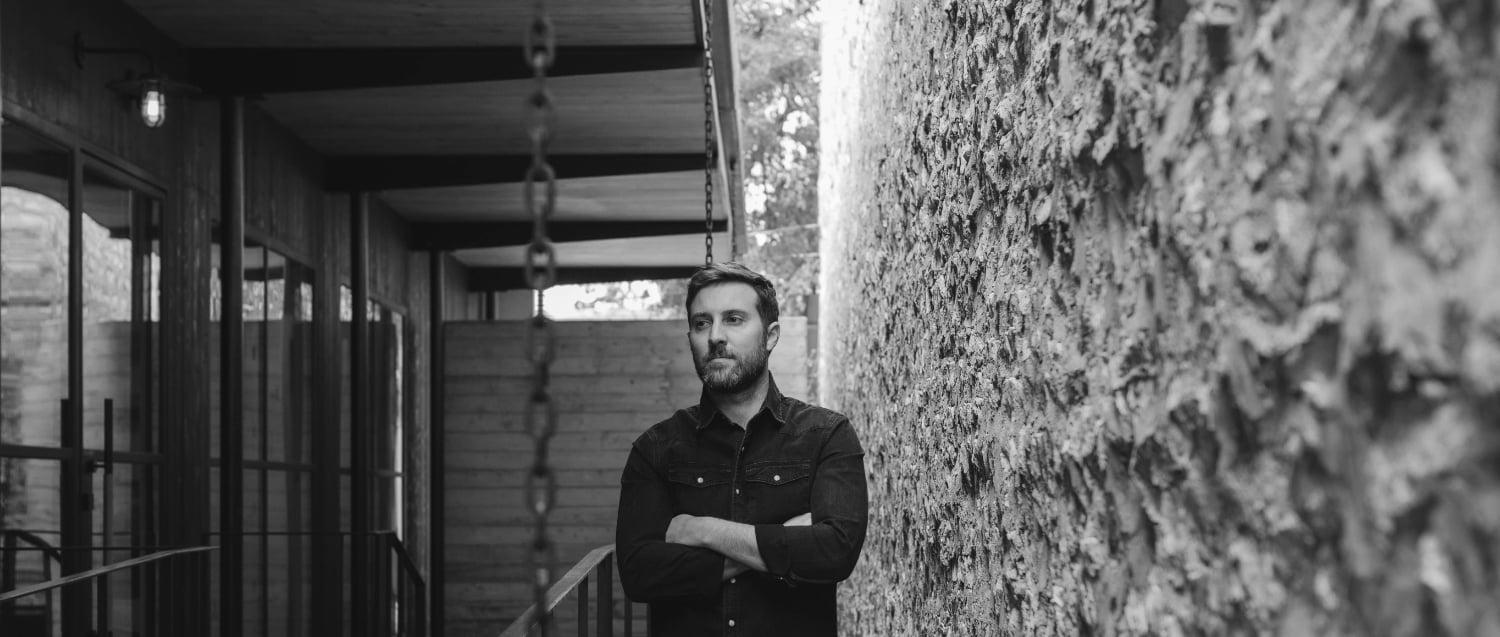

Jeff Garnett is an American architect and the founder of Jeff Garnett Architect, a practice focused on residential, cultural, and landscape-driven projects rooted in a deep sensitivity to place. Based in the United States, Garnett’s work is defined by a quiet, restrained architectural language that prioritizes clarity, material honesty, and a strong connection between built form and its natural surroundings. His approach is grounded in careful site observation, allowing each project to emerge from its specific context—whether expansive rural landscapes or more constrained historic settings. Notable works such as the Frazier Conservatory and Elk Edge Retreat exemplify this philosophy, where architecture acts as a framework for experiencing land, light, and atmosphere rather than imposing upon them. Across his practice, Garnett consistently explores the relationship between architecture and environment, emphasizing longevity, simplicity, and the use of natural, regionally grounded materials to create spaces that are both enduring and deeply connected to their place.
What inspires you?
I’m inspired first and foremost by place, the land itself. Walking a new site for the first time is always exciting to me because the possibilities are immediately present, yet there is still mystery. New moments and opportunities seem to unlock in real time as I move through the landscape. There’s a sense of anticipation in those early visits, imagining what could exist there while respecting what already does. I’ve been fortunate to have had opportunities to design in beautiful landscapes, and those site visits are always inspiring and foundational to my work.
Beyond architecture, I’m inspired by the unknown. As humans, we naturally try to define and control the world around us, but over time, I’ve learned to accept unpredictability and even draw from it. Instead, I focus on what’s directly in front of me. As an architect, that means working thoughtfully and intentionally, trusting that the impact, whether large or small, will carry meaning.
Being a father is now my greatest motivator. My wife and I have four amazing young children, and they are my biggest inspiration. Their outlook on life is fresh and unfiltered. Watching them experience the world reminds me to stay open, present, and grounded.
What inspired you to become an architect?
I was drawn to the built environment long before I had the language to describe it. As a kid, I would study how buildings sat on the land and how roads curved or cut through it during long drives. I was especially fascinated by utilitarian farm structures and old stone buildings, places shaped purely by need, climate, and available materials. Their simplicity and honesty stayed with me. I also found myself questioning neighborhood street grids and repetitive housing patterns, noticing when repetition felt excessive and wondering why things were arranged the way they were. At the same time, being around my father’s constant creativity made design feel natural and within reach. Over time, that curiosity simply grew into architecture.
How would you describe your design philosophy?
My design philosophy centers on clarity, restraint, and connection to context. Whether I’m designing in a remote landscape or within a more urban fabric, context is always key. It may be a neighboring building, a historic streetscape, or an expansive view across open land, but something is always informing the architecture.
I strive for work that feels modern yet deeply rooted, expressed through clean lines, honest materials, and thoughtful proportions. I believe in removing the unnecessary so that what remains carries meaning. If I’ve done my job well, the architecture feels calm, intentional, and inseparable from its surroundings.
What is your favorite project?
I approach every project with care and a sense of finality, as if it might be my last. That mindset keeps me fully invested each time. The Frazier Conservatory is one of my favorite built works because it extends beyond a single building and allows the architecture to shape movement and experience across an entire landscape. Set on a private ranch in North Central Texas, it functions as both a retreat and a nature center, encouraging people to slow down and reconnect with the land. My personal studio building is meaningful for different reasons, requiring restraint within a historic context, and Elk Edge Retreat stands out for its simplicity and direct relationship to its surroundings. That said, my favorite project is often the one currently in design, when ideas are still forming, and the possibilities feel wide open.
What is your favorite architectural detail?
I have a handful of details that have become favorites over time. I often return to custom leather door pull wraps, which I think of as the handshake to the building, the first tactile experience when entering a space. The leather patinas with touch and weather, quietly recording the life of the building and its occupants.
 Interview with Jeff Garnett of Jeff Garnett Architect 10
  Interview with Jeff Garnett of Jeff Garnett Architect 11 Detail at 110 Walnut Street / Jeff Garnett Architect © Costa Christ
I also revisit a custom rain shield designed to pair with rain chains, managing water deliberately while adding depth and shadow. I’m drawn to functional elements treated with intention rather than hidden. When guided thoughtfully, water becomes part of the architecture, bringing sound and movement during a storm. Seamless indoor and outdoor material transitions, especially at large glass openings, are equally important. Carrying materials across the glass line strengthens the connection between interior and landscape. For me, details are never decorative; they reinforce precision, function, and the overall intent of the architecture.
 Interview with Jeff Garnett of Jeff Garnett Architect 12
  Interview with Jeff Garnett of Jeff Garnett Architect 13
  Interview with Jeff Garnett of Jeff Garnett Architect 14 Details at 110 Walnut Street / Jeff Garnett Architect © Costa Christ
Do you have a favorite material?
I consistently return to native stone. I’m inspired by masonry traditions across Texas, Mexico, and beyond. Stone feels grounded and timeless. It connects architecture to history and to the land itself.
More broadly, I prefer natural materials that are native and regional to the project site whenever possible. I’m also drawn to steel, wood, and concrete exploration, particularly board-formed concrete and exposed aggregate flooring. I gravitate toward materials that are honest, tactile, minimal, durable, and low-maintenance. I want materials to age well and require very little intervention over time, becoming richer through use rather than needing constant upkeep.
What is your process for starting a new project?
I intentionally wait to sketch until after my first site visit. I try to be patient and let the land speak before putting pencil to paper. I walk the property, study topography, light, access, and views. I want the architecture to emerge from its environment rather than be imposed onto it.
That approach applies whether I’m working on a remote residence or a public project. Context is always the starting point.
How do you fuel your creativity?
Creativity is sustained by curiosity. I intentionally explore conceptual ideas and different program types, knowing that those explorations often influence future projects.
Carefully opening the door to more public-facing projects recently has challenged me to think differently about scale and responsibility. Designing for a broader audience shifts the conversation. It requires thinking beyond a single client or site and considering long-term impact, accessibility, and how architecture contributes to a larger community.
My children fuel my creativity as well. Seeing life through their eyes keeps me open and imaginative. Their perspective reminds me that creativity is not something to control too tightly, but something to nurture and protect.
How does the environment influence your work?
The environment is not a backdrop; it generates the design. Orientation, material selection, window placement, and proportion all respond to climate and context. I want architecture to enhance its surroundings rather than compete with them. Every decision has a lasting impact on the land and on the people who will inhabit it. Buildings endure for decades, sometimes generations, which carries a great deal of responsibility. The stakes are high, and that awareness keeps me intentional in how and where we build.
Experiencing the breeze, watching the sunset, and observing surrounding wildlife are moments that matter. They must inform the designer if the architecture is to feel properly integrated into its site. Any new structure is, in some way, a disruption to the natural environment. Acknowledging that reality keeps me thoughtful and deliberate at the start of every project.
How do you collaborate with clients to achieve their vision?
Collaboration begins with listening. I want to understand how clients live and what they value. My role is to interpret those desires through site, structure, and material. It’s a process of translation, turning personal stories and aspirations into physical form. When trust is established, and both sides are pushing toward something meaningful, the best work happens. Often, the strongest solutions emerge through dialogue, where ideas are refined together rather than dictated.
What inspired Elk Edge Retreat?
Elk Edge was inspired by the land itself. Set on a remote ranch surrounded by rolling hills and open skies, the home was designed to feel immersed in its surroundings while remaining restrained. Conceived as a quiet retreat from the city, it offers a place to slow down and reconnect with the landscape, while also bringing family and friends together. The central living space anchors the home, with a board-formed concrete fireplace at one end and the kitchen at the other, connected by a custom live-edge dining table that naturally becomes the gathering point. Deep porches and expansive glazing extend the living experience outward, keeping light, views, and the landscape present throughout the day. The architecture balances solitude and connection through intentional transitions between interior and exterior, allowing the land to remain part of daily life. It is a grounded, quiet project, less about statement and more about presence.
How did materiality shape the design and sustainability of the Elk Edge Retreat?
 Interview with Jeff Garnett of Jeff Garnett Architect 15
  Interview with Jeff Garnett of Jeff Garnett Architect 16
  Interview with Jeff Garnett of Jeff Garnett Architect 17 Elk Edge Retreat / Jeff Garnett Architect © Costa Christ
Materiality was central to the Elk Edge Retreat. Native limestone anchors the structure to the site and continues through the core of the home, reinforcing continuity between exterior and interior. Wood, concrete, and steel complement the stone, chosen for their durability, regional character, and ability to age gracefully with minimal maintenance. Sustainability was addressed through orientation, deep overhangs, and passive strategies rather than applied technology. The goal was longevity, creating a home designed to endure both physically and aesthetically for generations.
What advice would you give to young architects?
Stay curious. Take risks early. Protect your creative voice. Architecture requires patience and resilience. Respect the land and its existing context, and design with longevity in mind. Meaningful work follows consistency and discipline.
