
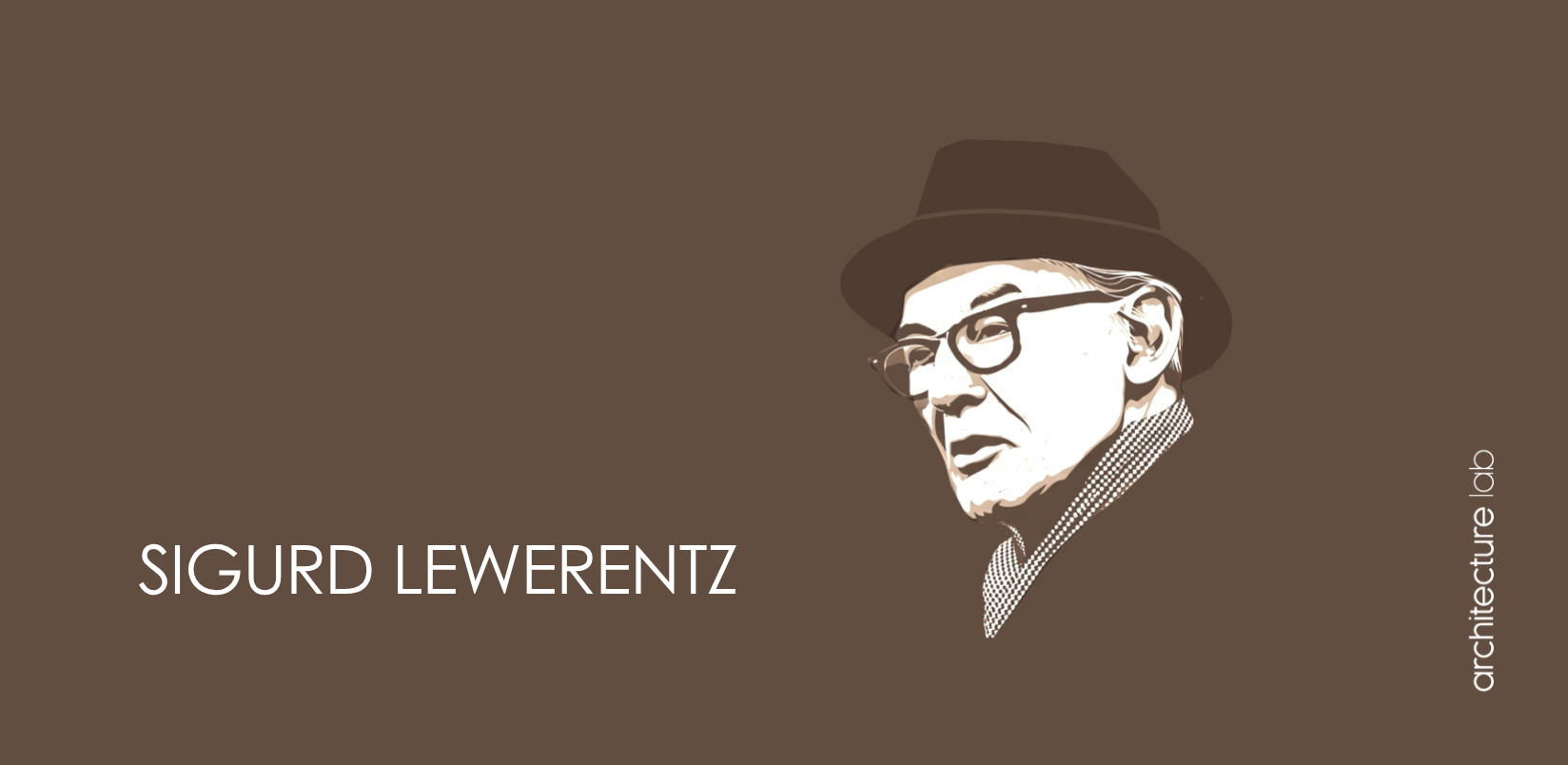

Sigurd Lewerentz (1885–1975) was a Swedish architect whose work moved from Nordic Classicism to austere modernism, shaped by engineering training at Chalmers University of Technology and apprenticeships in Germany and Stockholm under Carl Westman, Ragnar Östberg, and Ivar Tengbom. Lewerentz’s practice began in 1911, with the 1915 winning entry for Skogskyrkogården with Gunnar Asplund, followed by Riksförsäkringsanstalten, Malmö Opera and Music Theatre, the Chapel of Resurrection, St. Mark’s Church, and St. Peter’s Church, producing work characterized by material precision, landscape integration, and spatial restraint. His methods included uncut brick construction, controlled daylight, fabrication work at IDESTA, and a design process linking structure, material logic, and site conditions. Architects such as Louis Kahn, Peter Zumthor, Sverre Fehn, Adam Caruso, and Peter St John referenced his handling of light, mass, and detail. The Prince Eugen Medal, awarded in 1950, recognized Lewerentz’s architectural contribution. His portfolio encompassed cemeteries, churches, civic buildings, commercial interiors, and landscape compositions, and his drawings and built work serve as references for students examining material expression, construction-led design, and the architecture of sacred space.
 Sigurd Lewerentz, Swedish architect associated with material precision and site integration. © Karl-Erik Olsson Snogeröd
Who is Sigurd Lewerentz?
Sigurd Lewerentz is a Swedish architect born in 1885, known for understated architectural projects developed throughout the 20th century. Lewerentz grew up in the parish of Bjärtrå in northern Sweden and demonstrated early technical aptitude. He studied mechanical engineering at Chalmers University of Technology in Gothenburg, graduating in 1908. He later trained in architecture through apprenticeships in Germany and worked under established Swedish architects upon returning. Lewerentz opened his own practice in Stockholm in 1911. In 1915, he and Gunnar Asplund won the competition to design the Woodland Cemetery (Skogskyrkogården) in Stockholm. This project initiated Lewerentz’s career in public architecture and established him within modern architectural circles. Lewerentz remained professionally reserved and avoided public roles. He worked independently, focusing on built projects over visibility. He lived through Sweden’s modernist development and contributed significantly. Lewerentz died in 1975 in Lund at the age of 90. His body of work is studied for its technical execution and spatial clarity.
 Born in 1885 and active throughout the 20th century. © Pål-Nils Nilsson
What type of architecture does Sigurd Lewerentz represent?
Sigurd Lewerentz represents a fusion of Nordic Classicism and Modernist architecture, culminating in an austere personal style. Early in his career, Lewerentz worked within Nordic Classicism (Swedish Grace), a movement of the 1910s–1920s defined by classical forms, local materials, and minimal ornament. The Resurrection Chapel at the Woodland Cemetery exemplifies this style through its classical portico and proportional geometry. During the 1930s, Lewerentz adopted functionalist principles, designing buildings with simplified forms and modern construction. In his late-career churches, Lewerentz applied a form of minimalist modernism characterized by raw dark brick, concrete, and glass in rectilinear geometries. This approach reflected modernist principles such as formal reduction and material expression. Lewerentz’s architecture operated outside rigid stylistic schools, bridging classical tradition and modern design.
 A fusion of Nordic Classicism and Modernist architecture, culminating in an austere personal style. © Karl-Erik Olsson Snogeröd, ArkDesCollection
What is Sigurd Lewerentz’s great accomplishment?
Sigurd Lewerentz’s great accomplishment is establishing a paradigm for sacred and memorial architecture within modern design. Lewerentz redefined cemetery and church design by applying modernist reduction to culturally significant spaces. The Woodland Cemetery in Stockholm, co-designed in 1915, introduced a model where architecture and landscape formed an integrated memorial environment. This project, later recognized as a World Heritage Site, set a precedent in landscape architecture. His later churches, St. Mark’s and St. Peter’s, applied similar principles using untreated brick and controlled daylight to define spatial character. These projects demonstrated how austere forms and unadorned materials convey symbolic and spiritual intent. In 1950, Lewerentz received the Prince Eugen Medal, Sweden’s highest architectural distinction at the time. His small but influential body of work contributed a model of sacred architecture grounded in material clarity and spatial restraint.
 © Karl-Erik Olsson Snogeröd, ArkDesCollection
  © Carl-Hugo Gustafsson and Lars Gustafsson, ArkDes collection
What are Sigurd Lewerentz’s most important works?
Sigurd Lewerentz’s most important works include cemeteries, civic buildings, and churches. Key projects include Skogskyrkogården in Stockholm, a cemetery integrating landscape and architecture; Riksförsäkringsanstalten in Stockholm, a functionalist government office; Malmö Opera and Music Theatre, a public venue built during Sweden’s modernist period; St. Mark’s Church in Björkhagen, Stockholm; and St. Peter’s Church in Klippan, a late brick church recognized for its spatial and material rigor.
01. Skogskyrkogården (Woodland Cemetery), Stockholm
Skogskyrkogården, or the Woodland Cemetery, is one of Sigurd Lewerentz’s principal works, developed in collaboration with Gunnar Asplund. The cemetery occupies a forested site in southern Stockholm and originated from their winning submission to an international design competition in 1915. Development continued from the 1910s through 1940, combining pine woods, low hills, chapels, and grave sites. The project functions as a cemetery and memorial park, integrating built forms into the natural landscape. Lewerentz and Asplund shaped the site through paths, clearings, and a reflecting pond to guide movement. Within this setting, Lewerentz designed the Chapel of Resurrection (1925), a Nordic Classicist funeral chapel with a classical portico and a restrained interior. The material palette includes pale concrete, stone, and wood, chosen to weather in response to the forest surroundings. Skogskyrkogården holds UNESCO World Heritage status for its role in advancing modern cemetery design and integrating architecture with topography. The project marked a turning point in Lewerentz’s early career and established a model for later memorial landscapes.
 © Sigurd Lewerentz
  © Valentina Solano
  © Hans Lindqvist
  © Arild Vågen
  © Holger.Ellgaard
  © NatalieMaynor
  © Holger Ellgaard
  © Holger.Ellgaard
02. Riksförsäkringsanstalten (National Insurance Institute), Stockholm
The National Insurance Institute building in Stockholm, or Riksförsäkringsanstalten, is a key work by Sigurd Lewerentz that demonstrates his early engagement with modernist architecture. The structure, completed in 1932, served as the headquarters for Sweden’s social insurance administration. The building stands in central Stockholm and functions as a government office block with a transitional design bridging classicism and modern functionalism. Its exterior presents a rectangular stucco facade with symmetrical punched windows arranged in a classical grid. Ornamentation is minimal, limited to a carved Swedish coat of arms above the main entrance. The interior centers around an oval courtyard that supplies natural light to adjacent workspaces. Large windows support open-plan office layouts. A circular stair on one end and a straight stair on the other introduce spatial variation. Materials include reinforced concrete for the structure, stucco for the facade treatment, and steel for the window framing. Interior fittings and furnishings were custom-designed by Lewerentz through his metalworks firm BLOKK (later IDESTA). The building exemplifies early Swedish Functionalism applied to civic institutional form.
 © lewerentz.one
  © Lindén, Mats / ArkDes
  © architecture-history.org
  © lewerentz.one
  © lewerentz.one
  © lewerentz.one
  © lewerentz.one
  © lewerentz.one
  © lewerentz.one
  © lewerentz.one
03. Malmö Opera and Music Theatre, Malmö
The Malmö Opera and Music Theatre is a major public building co-designed by Sigurd Lewerentz, reflecting his role in shaping large-scale functionalist architecture. The venue opened in 1944 in Malmö, Sweden’s third-largest city, and was originally named Malmö City Theater. Planning began in the mid-1920s, with Lewerentz working alongside Erik Lallerstedt and David Helldén on the final design. The project’s design type is a monumental theater and opera house. The facade follows a wide, horizontal composition characteristic of 1930s functionalism, using plate glass framed by white marble and metal to present a public-facing modern aesthetic. A marble plaza and reflecting pool anchor the entrance, with a landscaped park extending behind the structure. Materials include white marble for cladding, glass for transparency, and steel for window framing. The interior features a 1,500-seat auditorium, finished in maple wood paneling for acoustic performance and lined with red upholstered seating. Cultural detailing includes sculptural works by Carl Milles and a stage curtain designed by textile artist Elsa Gullberg. Technically advanced for its time, the building incorporates a revolving stage, vertically adjustable orchestra pit, and movable acoustic panels. The Malmö Opera demonstrated how Swedish modernism could merge functional planning with artistic ambition. Lewerentz’s contribution reinforced his ability to navigate complex civic commissions with precision and lasting impact.
 © Sigurd Lewerentz
  © architectural-review.com
  © Rosenberg, Carl Gustaf Edvard
  © Jaerke
  © archipicture.eu
  © Jorchr
  © Flickr User: seier+seier
  © Francois Polito
04. St. Mark’s Church, Björkhagen (Stockholm)
St. Mark’s Church (Markuskyrkan) in Björkhagen, Stockholm, is a late-career work by Sigurd Lewerentz that embodies his mature architectural style. The church was completed and dedicated in 1960 following a period during which Lewerentz focused on industrial design. The building functions as a parish church for a local Lutheran congregation and is located in a wooded suburban area near the Woodland Cemetery. Its form is compact and low in profile, built entirely from dark brown brick used consistently for both exterior and interior surfaces. The design integrates structure and surface into a unified whole, with no applied ornament. External facades are blank and planar, punctuated by minimal openings that contribute to a monolithic presence. The church layout is asymmetrical, and the approach path leads visitors through birch trees on a slow, angled route. Interior spaces are defined by dim light, sloped brick vaults, and narrow vertical windows that channel daylight selectively. Materials include untreated brick, cast concrete, and wood furnishings. Lewerentz avoided cutting bricks during construction, adjusting mortar joints and wall dimensions to preserve full units. This method produced irregular mortar lines that contribute a subtle surface articulation. Fixtures such as handles and light fittings were custom-designed and fabricated through Lewerentz’s own metal workshop. The church excludes conventional religious symbols and instead emphasizes proportion, daylight, and material texture. St. Mark’s Church has become a reference point in studies of modern sacred architecture and anticipates the design direction of Lewerentz’s final project.
 © Holger.Ellgaard / Wikimedia Commons
  © Holger.Ellgaard / Wikimedia Commons
  © Flickr User: jmtp
  © Flickr User: jmtp
  © Flickr User: jmtp
  © Holger.Ellgaard / Wikimedia Commons
  © Flickr User: jmtp
  © Flickr User: jmtp
  © Flickr User: jmtp
  © Flickr User: jmtp
  © Flickr User: jmtp
05. St. Peter’s Church, Klippan
St. Peter’s Church (Sankt Petri Kyrka) in Klippan, Sweden, is a late work by Sigurd Lewerentz completed in 1966. The building occupies a site in the town of Klippan in southern Sweden and was designed when Lewerentz was in his late seventies. The project continues architectural strategies first developed at St. Mark’s Church and amplifies their spatial and material intensity. The plan is square, and the structure is built almost entirely of deep red brick. The design type is a parish church, but its execution departs from conventional ecclesiastical form. Externally, the church presents as an assemblage of solid brick volumes with sparse fenestration. Cruciform motifs and a separate brick bell tower establish its religious function. The overall massing has been compared to an industrial building, although every element reflects intentional compositional choices. Materials include uncut brick and mortar for walls, with concrete and steel used structurally, and bronze and wood introduced in door fittings and furnishings. The interior comprises a single tall volume with a brick floor and a shallow, vaulted brick ceiling. Light enters through narrow slots and high openings, producing distinct contrasts of shadow and illumination. Liturgical elements such as the altar, pulpit, and baptismal font are made from the same materials as the building envelope, reinforcing spatial unity. Orientation aligns with the traditional liturgical east-west arrangement, while seating and circulation adopt a more intimate, congregational configuration. The design avoids applied decoration and emphasizes form, weight, and material continuity. St. Peter’s Church has since become a widely studied example of late modern sacred architecture and remains one of Lewerentz’s most referenced works.
 © Chen Hao
  © Chen Hao
  © Chen Hao
  © Chen Hao
  © Chen Hao
  © Chen Hao
  © Chen Hao
  © Chen Hao
  © Chen Hao
  © Swedish Centre for Architecture and Design
  © Swedish Centre for Architecture and Design
  © Swedish Centre for Architecture and Design
How did Sigurd Lewerentz contribute to architecture?
Sigurd Lewerentz contributed to modern architecture through a design methodology that combined formal restraint with precise material expression and site integration. His work advanced the role of craftsmanship within industrialized construction and demonstrated how modernism could maintain ties to tradition. One major area of influence was the relationship between architecture and landscape. At the Woodland Cemetery, Lewerentz approached terrain, vegetation, and structures as interdependent design elements, establishing a precedent for integrated memorial and park design. Another key contribution was his use of unprocessed materials. Brick, stone, and metal were deployed in unrefined states, with construction techniques tailored to their inherent properties. This emphasis on material authenticity encouraged architects to express form through structure and surface rather than applied ornament. Lewerentz also expanded the formal range of modernism, showing that austere architectural language could carry solemnity and contextual resonance. His late churches influenced the development of Brutalist and minimalist architecture by demonstrating how raw material and light manipulation could support sacred spatial experience. In practice, Lewerentz pursued an interdisciplinary model. Through his company IDESTA, he designed and produced architectural components such as window systems and hardware, linking design intent with fabrication. This approach prefigured contemporary design-build and prefabrication workflows. His influence extended through built work and documentation. Although he did not hold academic posts, his drawings and construction detailing have served as reference material for successive generations of architects.
What awards and honors has Sigurd Lewerentz received?
Sigurd Lewerentz received awards and honors that acknowledge his architectural work, including:
- Prince Eugen Medal for Architecture (1950) – Awarded by the King of Sweden for Lewerentz’s architectural contribution.
- Order of Vasa (Knight, 1932; Knight Commander, 1963) – Conferred by the Swedish state for architectural service.
- Kasper Salin Prize (1962) – Awarded for St. Mark’s Church in Stockholm, the inaugural recipient of Sweden’s most prominent architectural prize. The project was recognized by the Swedish Association of Architects as the year’s leading building.
- Tessin Medal (1962) – Presented by the Royal Academy of Fine Arts in Stockholm, acknowledging Lewerentz’s contribution to Swedish architectural culture. The medal is named after architect Nicodemus Tessin.
- Member, Royal Danish Academy of Fine Arts (1954) – Inducted into Denmark’s principal arts academy, marking international recognition of his architectural influence.
- First Prize, Woodland Cemetery Competition (1915) – Winning entry, with Gunnar Asplund, for the design of Skogskyrkogården in Stockholm, later designated a UNESCO World Heritage Site.
- ArkDes Retrospective: “Sigurd Lewerentz: Architect of Death and Life” (2021–2022) – A comprehensive exhibition at Sweden’s national architecture museum, presenting drawings, models, and archival material and reaffirming Lewerentz’s lasting impact on modern architecture.
Sigurd Lewerentz received additional honors, among them honorary doctorates awarded by the KTH Royal Institute of Technology in 1962 and the Technische Hochschule in Munich in 1967 for architectural work.
Did Sigurd Lewerentz change the architecture industry?
Sigurd Lewerentz influenced architectural practice in how materials and sacred space are treated. His work introduced new models for craft-oriented and context-sensitive design during a period dominated by industrial standardization. Projects such as his brick churches demonstrated that modern architecture could operate without historical references while achieving spatial and emotional depth. Architects including Louis Kahn and later minimalist designers studied Lewerentz’s use of light and material, adapting his methods in their own work. The emphasis on material authenticity and experiential quality gained wider traction in architectural values during and after his lifetime. Lewerentz also altered relationships between design and fabrication. His development of custom fixtures and management of a metalworks firm connected architectural intent with manufacturing, anticipating integrated design-build approaches. In Scandinavia, his work informed changes in church architecture and memorial design, separating them from academic historicism and generic modernism. While not a widely public figure, Lewerentz’s work contributed to broader architectural attention to regional context, construction process, and spatial character. References to natural terrain, exposed materials, and minimal intervention in later architecture continue patterns evident in Lewerentz’s projects.
Was Sigurd Lewerentz ever controversial in any way?
Sigurd Lewerentz maintained a low public profile and worked without involvement in professional disputes or personal scandal. Some of his architectural decisions prompted discussion within the architectural community. The design of St. Peter’s Church in Klippan, for example, drew early criticism for its austere brick exterior and minimal detailing, which some observers compared to industrial buildings. These responses reflected reactions to its nontraditional form rather than objections to Lewerentz himself. Another area of debate was his decision to pause architectural practice during the 1940s in order to manage IDESTA, a hardware and metal fabrication company. The shift raised questions among colleagues who viewed the move as a withdrawal from major commissions. In the 1930s, critical responses to some of his stylistically hybrid projects included the label “pseudo-functionalism,” referring to his combination of classical and modern elements. These discussions remained within the bounds of professional discourse. Lewerentz’s career was not marked by feuds, misconduct, or political controversy, and his reputation remained grounded in his architectural work and technical focus.
Who are the most famous architects in modern history besides Sigurd Lewerentz?
Aside from Sigurd Lewerentz, Le Corbusier, Frank Lloyd Wright, and Alvar Aalto have played central roles in shaping modern architecture. Le Corbusier (Swiss-French, 1887–1965) established key modernist principles such as the “Five Points of Architecture” and designed projects including Villa Savoye and the Unité d’Habitation. His work defined the International Style through open plans, functionalist construction, and the use of concrete and glass. Frank Lloyd Wright (American, 1867–1959) developed the concept of Organic Architecture, visible in projects such as Fallingwater and the Guggenheim Museum. His designs emphasized environmental integration and spatial flow. Alvar Aalto (Finnish, 1898–1976) combined functional modernism with local materials and human-centered forms in buildings such as the Paimio Sanatorium and Villa Mairea. Aalto also contributed furniture designs, including the Aalto stool. Ludwig Mies van der Rohe (German-American, 1886–1969) advanced steel-and-glass modernism through works like the Barcelona Pavilion and the Seagram Building. Walter Gropius (German, 1883–1969) founded the Bauhaus and applied its design principles to buildings such as the Bauhaus Dessau. Louis Kahn (American, 1901–1974) emphasized mass and light in modern architecture, as seen in the Salk Institute and the National Assembly Building in Dhaka. Richard Rogers and Norman Foster (British) introduced High-Tech architecture, exemplified by the Centre Pompidou (Rogers, with Renzo Piano) and the Hong Kong & Shanghai Bank HQ (Foster). Frank Gehry (Canadian-American, born 1929) applied deconstructivist methods in buildings such as the Guggenheim Museum Bilbao. Zaha Hadid (Iraqi-British, 1950–2016) implemented parametric design and curved geometries in the Heydar Aliyev Center and the London Aquatics Centre. Tadao Ando (Japanese, born 1941) is known for cast-in-place concrete architecture emphasizing light and spatial clarity. Santiago Calatrava (Spanish, born 1951) designs expressive structures that integrate engineering and form.
What did Sigurd Lewerentz mostly design?
Sigurd Lewerentz primarily designed solemn public spaces, with a concentration in religious and memorial architecture and select civic and commercial projects. His portfolio can be grouped into four main categories:
- Sacred and Memorial Architecture: Lewerentz is best known for cemeteries, chapels, and churches. Key works include the Woodland Cemetery in Stockholm, the Eastern Cemetery in Malmö, and the churches of St. Mark’s and St. Peter’s. These projects are defined by their spatial restraint, site-specific planning, and use of brick and stone to create atmosphere.
- Public and Institutional Buildings: Civic commissions include the Malmö Opera and Music Theatre, the National Insurance Institute building in Stockholm, and temporary structures for the Stockholm International Exhibition (1930), co-designed with Gunnar Asplund. These projects balanced formal clarity with public utility.
- Commercial and Industrial Design: In the 1920s–30s, Lewerentz designed commercial interiors such as shops and restaurants, including a proposed floating dance pavilion. In the 1940s, he shifted focus to industrial design, founding IDESTA to manufacture architectural metalwork, including windows and hardware.
- Landscape and Urban Elements: Lewerentz consistently shaped outdoor environments alongside buildings. His layouts for cemetery parks and church approaches reflect a unified treatment of built and natural form. Movement through space was integrated into the architectural composition.
The body of work is focused on projects related to community, ritual, and memory. Lewerentz rarely designed speculative housing or commercial towers. His output is defined by singular, site-driven works with emphasis on material expression, permanence, and restraint.
Where did Sigurd Lewerentz study?
Sigurd Lewerentz studied mechanical engineering at Chalmers University of Technology in Gothenburg, Sweden, from 1905 to 1908. His education focused on structures, mechanics, and materials rather than formal architectural training. This technical background informed his architectural work, particularly his attention to construction and material performance. After graduation, he transitioned into architecture through apprenticeships rather than academic degrees. In the late 1900s and early 1910s, he worked in architectural offices in Germany, where he encountered prevailing European design ideas. Upon returning to Sweden, Lewerentz apprenticed with architects Carl Westman, Ragnar Östberg, and Ivar Tengbom in Stockholm. These mentors, known for buildings such as Stockholm City Hall and Stockholm’s Concert Hall, exposed him to National Romanticism and early modernist approaches.
Did Sigurd Lewerentz have any famous teachers or students?
Sigurd Lewerentz trained under several leading Swedish architects during his early career. He apprenticed with Carl Westman, Ragnar Östberg, and Ivar Tengbom, whose projects such as Stockholm City Hall (Östberg) and Stockholm Concert Hall (Tengbom) exposed him to National Romantic and emerging modernist design. Gunnar Asplund, his contemporary and collaborator on the Woodland Cemetery, also played a formative role. Their partnership involved reciprocal learning through design collaboration rather than formal mentorship. Lewerentz did not teach in academic settings or lead a large architectural studio. No direct students emerged from his office in the manner of traditional ateliers. However, later architects have studied his work closely, regarding his built projects and drawings as a form of instruction. Notable architects who cite Lewerentz as an influence include Peter Zumthor, who draws from Lewerentz’s treatment of light and materials; Adam Caruso and Peter St John, who adapted his detailing methods in their gallery architecture; and Colin St. John Wilson, who published a study of Lewerentz’s work in 1988. Architects in Sweden and beyond have engaged with Lewerentz’s buildings through documentation and site visits. His indirect influence spans generations, with figures such as Sverre Fehn acknowledging Lewerentz’s approach to craft and spatial atmosphere. While Lewerentz had no formal students, his legacy continues through architects who have internalized his methods and principles.
How can students learn from Sigurd Lewerentz’s work?
Students can learn from Sigurd Lewerentz’s work by examining his design process, built projects, and guiding principles. Drawings and photographs of St. Peter’s Church and St. Mark’s Church provide insight into his use of proportion, light, and material. A narrow window in a thick brick wall demonstrates restraint and precision. Case studies or visits to his buildings offer opportunities to experience how design shapes space. Material and craftsmanship served as core values in his practice. The decision to use whole bricks without cuts teaches respect for material logic. Hands-on exercises, such as designing with unaltered units or limited palettes, echo his disciplined methods. Contextual and site-sensitive design emerges consistently in his portfolio. The Woodland Cemetery’s plan follows the terrain’s natural contours; St. Mark’s Church is reached by a path through birch trees. These choices emphasize the importance of setting, sequence, and topography. His career path offers further lessons. A focus on a limited number of projects, prolonged refinement, and periods away from active practice show that architectural work can be slow, deliberate, and idea-driven. Writings, critiques, and interviews, such as those by Johan Celsing or Kieran Long, expand understanding of his intent. A personal and consistent architectural language defines his legacy. Trends were resisted in favor of clarity and permanence. Students studying his work gain tools for developing individual voice, understanding spatial atmosphere, and honoring materials through thoughtful construction.