
During Hollywood’s golden age, studio bosses imposed a famous rule on their stars: go anywhere you like on your days off, so long as it is within 100 miles of Los Angeles. This rule helped turn Palm Springs into a desert escape for a generation of actors, directors and producers in search of sun and seclusion. By the late 1940s, the city had become synonymous with poolside glamour, drawing figures such as Frank Sinatra—who was known as “Chairman of the Desert”—Elvis, and Elizabeth Taylor, alongside artists, designers, and cultural figures.
The pool deck at the Herbert W. Burns-designed Holiday House is ringed by navy umbrellas and loungers and looks out over the San Jacinto Mountains.
The architects who followed the stars to the desert—the likes of Richard Neutra, Hugh Kaptor, Albert Frey, William F. Cody, and Herbert W. Burns—responded to the desert landscape with a distinctly local approach to modernism. “Palm Springs in the midcentury period was essentially a laboratory,” says Steven Keylon, a local architectural historian.
“Because people were building vacation homes, they felt free to experiment with modernism in ways they might never have risked back home. The harsh sun, heat, and wind pushed these architects further still, and the result was a concentration of serious modern architecture in a small desert town that you simply don’t find anywhere else.”
The barn-like reception area at Sparrows Lodge—which was built in 1952 by MGM actor Don Castle and his wife Zetta—retains its original stone fireplace and exposed timber beams, furnished with leather butterfly chairs and a built-in window seat.
Today, many of Palm Springs’ boutique hotels carry on that architectural legacy. The properties below, all members of Palm Springs Preferred Small Hotels, span nearly a century of the city’s history, from a 1920s adobe hacienda to a 1960s modernist compound rumored to have hosted some very high-profile trysts.
1. Casa Cody
The oldest operating hotel in Palm Springs was founded in the 1920s by Harriet Cody, cousin of Buffalo Bill, and quickly became popular with Hollywood guests. Today, following a considered restoration by Casetta Group, the property features a collection of cottages with interiors by Electric Bowery, set across more than 1.5 acres of bougainvillea-fringed grounds dotted with multiple small pools. Several historically significant buildings remain, including an adobe dating to the early 1900s and a cottage that once housed athletes during the 1932 Los Angeles Olympics.
“There’s a sense of enclosure and calm at Casa Cody that’s increasingly rare,” says Keylon. “Sequestered inside its walls, you can get a real feeling for what Old Palm Springs must have been like.”
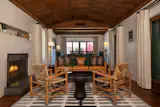
The two-bedroom Adobe House was built in the early 1900s—and features a living room stage and a wine cellar. Opera singer Lawrence Tibbett installed the stage and Charlie Chaplin is said to have performed here.
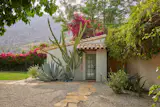
Harriet’s Cottage is one of Casa Cody’s most requested houses, surrounded by bougainvillea and cacti gardens that evoke the spirit of Palm Springs.
2. The Hideaway Palm Springs
There are more Herbert W. Burns-designed small hotels in Palm Springs than by any other architect, according to Keylon, who wrote Burns’s biography. Designed in 1947, the Hideaway is one of the most carefully restored. “Burns mastered Late Moderne—the architecture of leisure destinations like early Las Vegas and Miami Beach—and put it to brilliant use here,” says Keylon. Today, the 10-room property still evokes the relaxed, sociable atmosphere that the “wildly extroverted” Burns and his wife were known for.
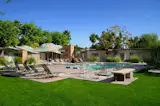
At the Hideaway Palm Springs, the emphasis is on outdoor living. Each of the 10 rooms opens directly onto a patio that leads to the pool area, which is equipped with plenty of lounging options. “The Burns magic is still present,” says Keylon.
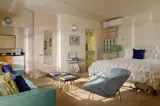
Now under the stewardship of Town & Desert Hospitality, the boutique property has been meticulously restored without losing its original midcentury charm.
3. Holiday House
Another Herbert W. Burns original, Holiday House was built in 1951 and has since been substantially reimagined by interior designer Mark D. Sikes and the team behind Sparrows Lodge (a hotel that also made our list). The 28-room property is now characterized by a palette of bright blues, with Gio Ponti–inspired tilework and an art collection that includes pieces by David Hockney, Roy Lichtenstein, Herb Ritts, and Alex Katz.

Mark D. Sikes’s interiors are defined by signature blue, from the wallpaper and upholstery to martini glasses. Rattan and woven details—including a bar cart, pendant light and mirror—evoke the relaxed glamour that defines Palm Springs.
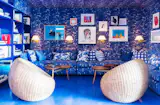
The blue theme continues into the communal lounge, which features a salon-style art wall and oversized wicker chairs. The collection includes work by David Hockney and Roy Lichtenstein.
4. Sparrows Lodge
The sister property to Holiday House is Sparrows Lodge. Built in 1952 by MGM actor Don Castle and his wife, Zetta, as a resort for Hollywood’s inner circle—and fittingly known as Castle’s Red Barn. Legend has it that Elizabeth Montgomery of “Bewitched” fame held her first wedding here.
The 20-room lodge has been through several names since, but a 2013 restoration returned the original buildings to their barn-like simplicity. The rooms feature exposed beams, concrete floors with inlaid pebbles, and horse troughs repurposed as bathtubs, and the hotel boasts a fine art collection with works by artists long associated with Palm Springs, including Ed Ruscha, Alex Katz, and John Baldessari.
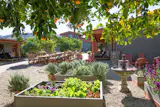
The Lodge’s vegetable garden and citrus trees sit between raised beds and a communal outdoor dining area with the original rustic stone-and-timber buildings behind.
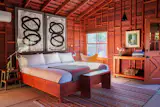
Guest rooms feature the property’s signature russet wood-clad walls adorned with abstract art, exposed beam ceilings, and concrete floors. The beds are topped with Swiss Army blankets.
5. The Monkey Tree Hotel
Built in 1960, this 16-room hotel is a slice of midcentury design history that comes with one of the desert’s more colorful footnotes: it’s reputedly where JFK and Marilyn Monroe conducted their trysts. Often mis-attributed to architect Albert Frey, Keylon has traced the true designer to Colleen Carol Crist, a draftswoman who worked for both William Cody and E. Stewart Williams—making it one of the very few midcentury buildings in Palm Springs designed by a woman. “The Monkey Tree has a far more interesting story than the Frey legend ever gave it,” says Keylon. “But like so many Palm Springs legends and myths, it will not die!”
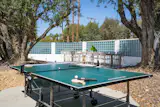
The one-acre grounds include table tennis beneath mature trees, with the property’s distinctive glass-block boundary wall behind.
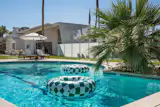
The heated saltwater pool is framed by a sprawling lawn for sun-bathing.
6. A Place in the Sun
This vintage garden hotel was originally built as a retreat for the production crew of the 1951 George Stevens film “A Place in the Sun,” starring Elizabeth Taylor and Montgomery Clift. The current owners have restored the property in keeping with this cinematic history—think 16 single-story bungalows with brightly colored doors arranged around a heated pool and spa, set on over an acre of lawn and palm tree gardens.
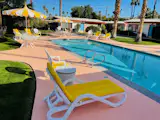
Yellow loungers and striped parasols ring the heated pool, with the single-story bungalows and their colorful doors just steps away.
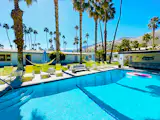
The 16 bungalows form an enclave around the pool and spa, framed by towering palms and views of the San Jacinto Mountains.
7. L’Horizon Resort & Spa
Architect William F. Cody designed L’Horizon in 1952 as a private retreat for television producer and oil tycoon Jack Wrather and his actress wife, Bonita “Bunny” Granville. “Cody was the most purely gifted of the desert architects of this period,” says Keylon. “His architecture has an unmistakable panache, and L’Horizon has always been among the most beautifully designed small resorts in Palm Springs.”
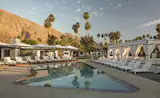
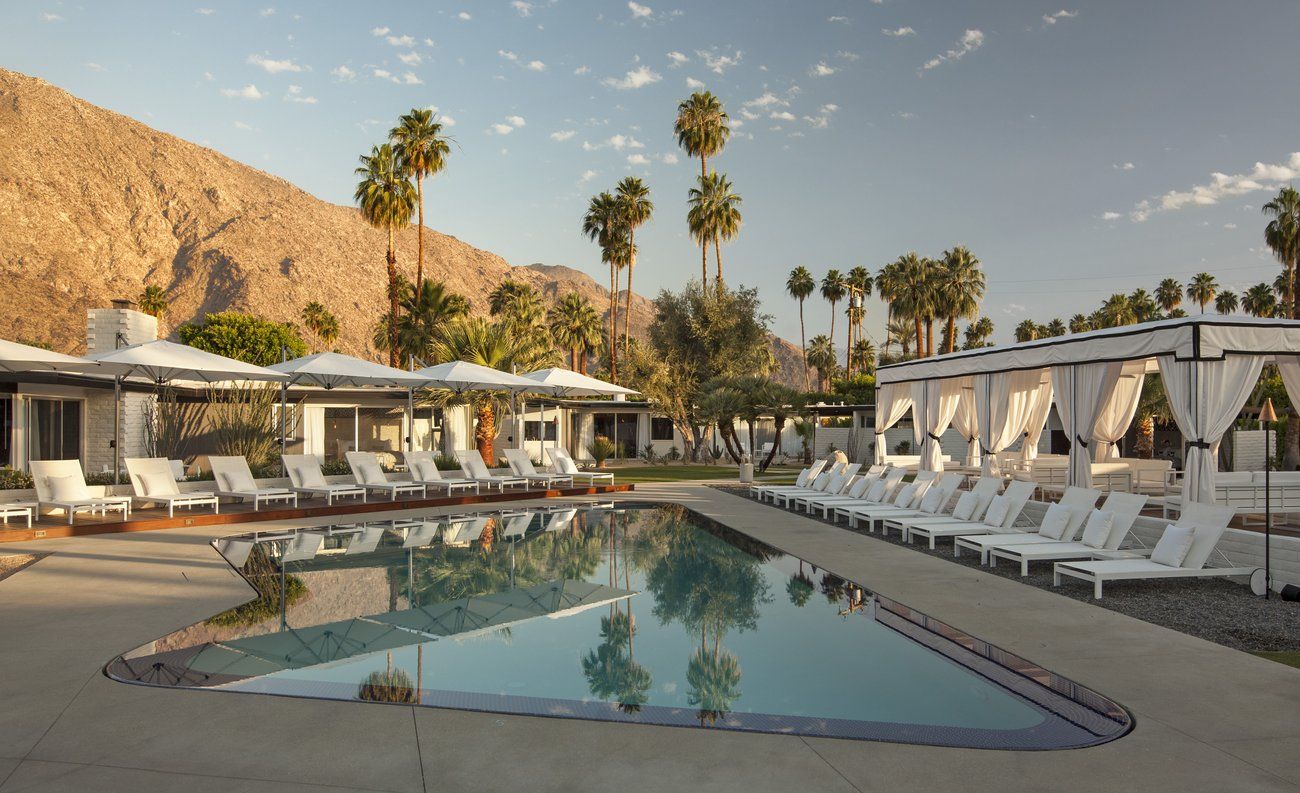
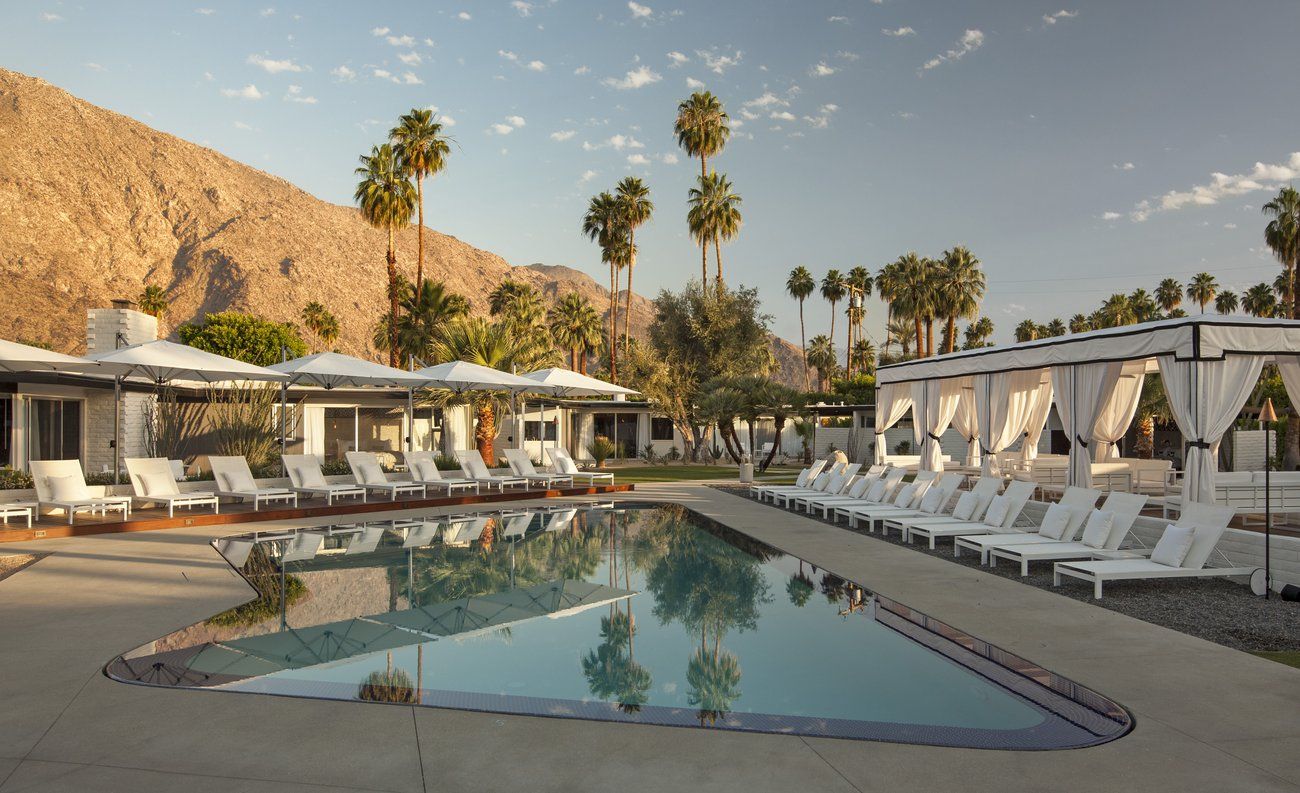
The central pool is surrounded by white loungers and private cabanas, with views of the nearby mountains and palm trees.
Today, there are 25 bungalows scattered across three acres, with the showpiece being the Residence—Wrather’s original 2,000-square-foot home, complete with its own pool and mountain views. “Simply slow down and look,” Keylon advises guests. “The proportions, the detailing and the relationship between the buildings and the gardens all reward attention.”
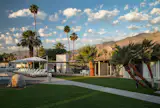
The low-rise bungalows sit across three manicured acres, with the San Jacinto Mountains providing a dramatic backdrop.
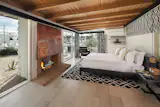
Designer Steve Hermann led the restoration of L’Horizon. The 25 bungalows feature timber-beamed ceilings, white brick walls, and floor-to-ceiling glazing, with a copper-clad fireplace as the focal point.
8. Villa Royale
Built in 1947 by Evelyn Pell—whose children’s initials, V and R, are rumored to have given the hotel its name—Villa Royale reopened in 2018 after a renovation that co-owner John Janulis described as preserving “a true Palm Springs time capsule.” The 38-room property is full of bold patterns and artisanal tilework from Spain, Mexico, and Portugal, and more than 50 original oil paintings were commissioned for the relaunch.
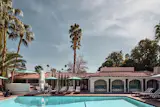
Three mountain-view pools are set across the grounds, with the striped sun-loungers complemented by colorful tiles.
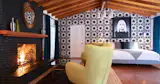
Each of the 38 rooms has a distinct look, with midcentury modern furniture, boldly patterned tiles, terracotta floors, and original artworks.