

Architect: Philip Johnson; John Burgee
Area: ~63,650 m² (~685,000 ft²)
Year: 1984
Photography: Philip Johnson, 550 Madison, Time Inc., Bernard Duperrin, Jackx, Karl Loeffler, Maurizio Mucciola, mini malist, paulkhor, Roman Kruglov, Rory Hyde, Sigmar, David Shankbone, Citizen59, Jim Henderson, Matthew G. Bisanz, Rory Hyde, Hrag Vartanian, The Olayan Group, Tdorante10, Dfwcre8tive, Epicgenius, Štěpán Vrzala, Anna Fixsen, 6sqft.com
Associate Architect: Simmons Architects
Structural Engineer: Leslie E. Robertson Associates
Developer: AT&T Corporation
Style: Postmodern
City: New York City
Country: United States
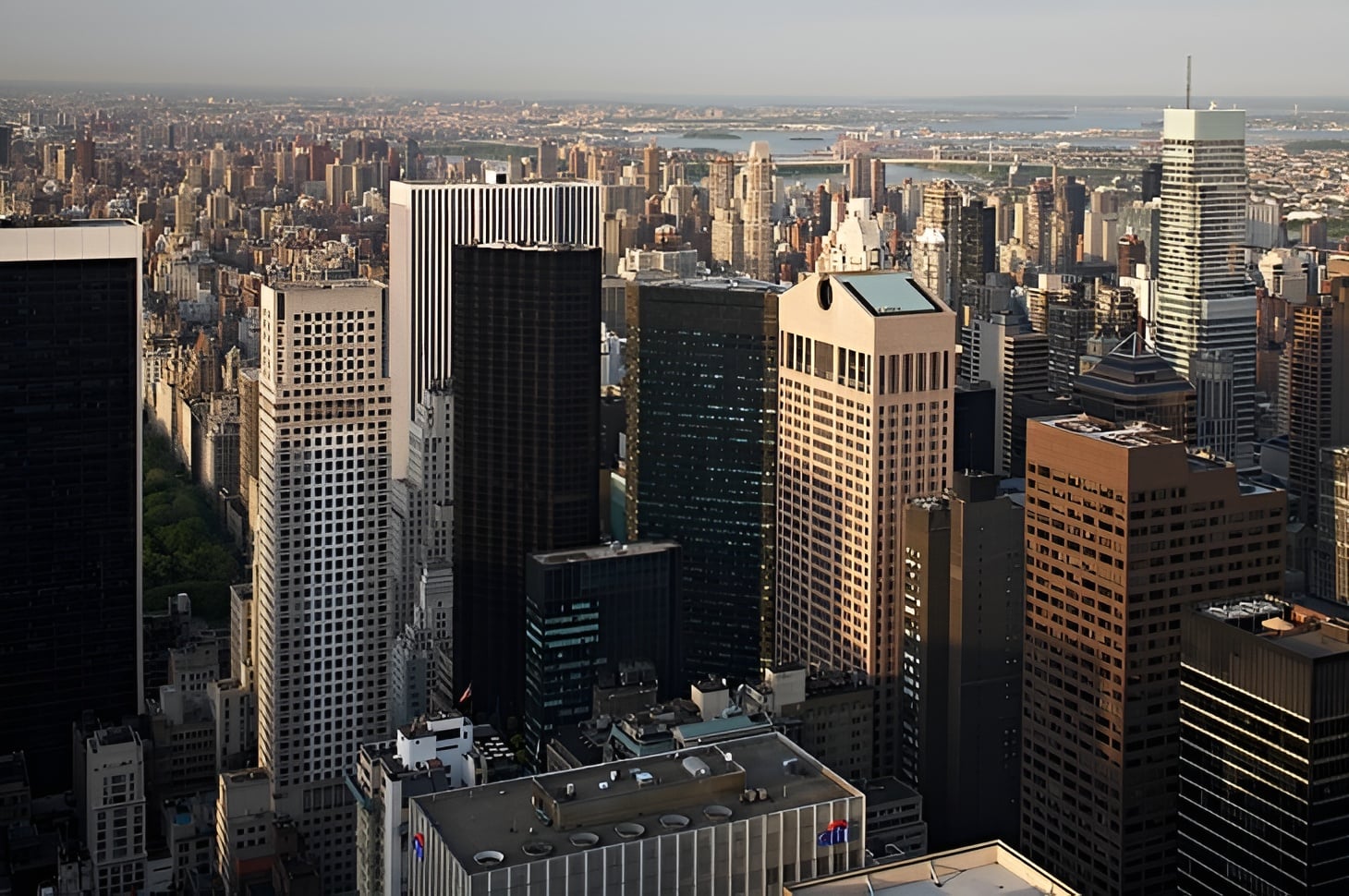
Philip Johnson and John Burgee’s AT&T Building, completed in 1984 in Midtown Manhattan, is widely recognized as a landmark of Postmodern architecture. Designed as AT&T’s corporate headquarters, the 37-story tower challenged the dominant modernist skyscraper model by incorporating historical references and symbolic architectural forms. The building occupies a site on Madison Avenue between East 55th and East 56th Streets and rises as a continuous vertical mass without setbacks. Its composition follows a classical tripartite structure consisting of a base, shaft, and capital. At street level, a monumental entrance arch and arcaded ground floor create a strong civic presence while mediating between the urban streetscape and the building interior. The façade is clad in pink Stony Creek granite, contrasting with the glass curtain walls typical of modernist office towers. Although supported by a modern steel frame, the heavy stone cladding evokes the solidity and permanence of masonry construction. Recessed windows and vertical bay organization further emphasize the tower’s monumental character. The building’s most distinctive feature is its broken pediment crown with a circular opening, commonly known as the “Chippendale top.” This architectural gesture reintroduced expressive skyline forms to skyscraper design and became a recognizable symbol of Postmodern architecture. Inside, the building contains a grand lobby, a seventh-floor sky lobby, and approximately 685,000 square feet of office space. Since its completion, the structure has undergone several renovations and ownership changes, including its period as Sony Tower. Designated a New York City landmark in 2018, the building remains an influential example of late twentieth-century architectural experimentation.
Completed in 1984 as the headquarters of the American telecommunications company AT&T, the AT&T Building at 550 Madison Avenue in Midtown Manhattan marked a decisive turning point in late twentieth-century architecture. Designed by Philip Johnson and John Burgee, the 37-story tower rises to 647 feet (197 m) and is widely regarded as one of the defining works of Postmodern architecture. With its pink granite façade and distinctive broken pediment—popularly known as the “Chippendale top”—the building openly challenged the orthodoxy of modernist skyscraper design, reintroducing historical reference, symbolism, and monumentality into the corporate tower typology.
 AT&T Building / Philip Johnson + John Burgee | Classics on Architecture Lab 76
  AT&T Building / Philip Johnson + John Burgee | Classics on Architecture Lab 77
  AT&T Building / Philip Johnson + John Burgee | Classics on Architecture Lab 78
The project emerged during a period of growing dissatisfaction with the rigid formal language of postwar corporate modernism. AT&T sought a headquarters that would project dignity and permanence while distinguishing itself from the glass-and-steel towers that had defined Midtown Manhattan since the 1950s. In 1977, the company commissioned Johnson/Burgee Architects after a competitive selection process involving several major American firms. Johnson, who had earlier championed modernism through his collaboration with Ludwig Mies van der Rohe on the Seagram Building, had begun to explore historicist references and symbolic architectural language. The AT&T Building provided an opportunity to apply these ideas on a monumental urban scale.
 UNITED STATES – MAY 1978: Architect Philip Johnson hoding a model of the AT&T building he designed.
Photo by Bill Pierce/Time & Life Pictures/Getty Images  AT&T Building / Philip Johnson + John Burgee | Classics on Architecture Lab 79
The tower occupies a rectangular site on Madison Avenue between East 55th and East 56th Streets in Midtown Manhattan. The lot measures approximately 36,800 square feet (3,420 m²). Unlike earlier New York skyscrapers shaped by setback regulations, the building rises as a continuous vertical volume without interruption, emphasizing its height through strong vertical banding across the façade. The composition follows a tripartite arrangement reminiscent of classical architecture, with a clearly articulated base, shaft, and capital.

At street level, the building is defined by a monumental entrance arch facing Madison Avenue. Rising approximately 116 feet above the sidewalk, the arch frames a large arched window and circular oculus above the main entrance. Flanking arcades extend along the ground floor, originally forming a covered pedestrian passage leading toward an interior atrium behind the tower. The geometry of the arch, oculus, and semicircular openings draws from Renaissance and classical architectural precedents, creating a dramatic transition between the dense Midtown streetscape and the building’s interior spaces.
 AT&T Building / Philip Johnson + John Burgee | Classics on Architecture Lab 80
  AT&T Building / Philip Johnson + John Burgee | Classics on Architecture Lab 81
  AT&T Building / Philip Johnson + John Burgee | Classics on Architecture Lab 82
  AT&T Building / Philip Johnson + John Burgee | Classics on Architecture Lab 83
  AT&T Building / Philip Johnson + John Burgee | Classics on Architecture Lab 84
  AT&T Building / Philip Johnson + John Burgee | Classics on Architecture Lab 85
  AT&T Building / Philip Johnson + John Burgee | Classics on Architecture Lab 86
The tower’s façade is clad in roughly textured pink Stony Creek granite, marking a deliberate departure from the glass curtain walls that dominated late-modern corporate architecture. More than 13,000 tons of granite were used, with panels individually anchored to the steel structural frame. Although the building relies on a conventional steel skeleton typical of contemporary skyscrapers, the heavy stone cladding evokes the visual solidity and permanence of traditional masonry construction. This juxtaposition between modern structural technology and historically evocative surfaces became a defining characteristic of Postmodern architecture.

Above the granite base, the main shaft of the building is organized into vertical bays containing recessed windows framed by deep stone surrounds. The recessed openings cast strong shadows across the façade, reinforcing the tower’s vertical emphasis while giving the exterior a sense of depth absent in most modernist curtain-wall towers. The lack of setbacks contributes to the perception of the building as a monumental stone volume rising directly from the street.
 AT&T Building / Philip Johnson + John Burgee | Classics on Architecture Lab 87
  AT&T Building / Philip Johnson + John Burgee | Classics on Architecture Lab 88
The most recognizable element of the design is the tower’s crown. Johnson and Burgee introduced a large broken pediment with a circular opening at its center, creating a highly distinctive skyline profile. The form draws on classical and Baroque architectural motifs but is executed at the scale of a modern skyscraper. Its resemblance to eighteenth-century Chippendale furniture led critics and observers to nickname the feature the “Chippendale top.” By reintroducing a decorative crown to the skyscraper form, the design rejected the flat roofs typical of International Style towers and reasserted the skyline as an architectural composition.

Inside the building, the main lobby sits directly behind the monumental arch and originally featured marble flooring, granite walls, and a groin-vaulted ceiling. Elevators lead from this space to a sky lobby located on the seventh floor, which functions as the primary access point to the office levels above. The tower contains approximately 685,000 square feet (63,650 m²) of office space distributed across thirty-seven floors. Behind the tower, a public atrium originally connected Madison Avenue to a secondary structure at the rear of the site, forming an interior pedestrian route through the block.
 AT&T Building / Philip Johnson + John Burgee | Classics on Architecture Lab 89
  AT&T Building / Philip Johnson + John Burgee | Classics on Architecture Lab 90
  AT&T Building / Philip Johnson + John Burgee | Classics on Architecture Lab 91
Construction began in 1978 and the tower topped out in November 1981 before being completed in 1984 at a cost of roughly $200 million. Structural engineering was carried out by Leslie E. Robertson Associates, while Simmons Architects served as associate architect on the project. The building was designed to accommodate advanced telecommunications infrastructure and large corporate offices, resulting in higher-than-typical floor-to-ceiling heights within the office levels.
 AT&T Building / Philip Johnson + John Burgee | Classics on Architecture Lab 92
  AT&T Building / Philip Johnson + John Burgee | Classics on Architecture Lab 93
Even before its completion, the AT&T Building generated intense debate within the architectural community. For many critics, the design represented a direct rejection of modernism’s emphasis on abstraction and functional expression. Others dismissed its historic references as superficial decoration applied to a conventional office tower. Despite the controversy, the building quickly became a defining symbol of Postmodern architecture and helped legitimize the movement within mainstream architectural practice.

Over time, the building underwent several ownership changes and renovations. Sony leased the structure in 1991 and later purchased it in 2002, leading to its long association with the name “Sony Tower.” After further redevelopment and restoration in the late 2010s and early 2020s, the building was repositioned as a modern office property under its address, 550 Madison. In 2018, the exterior was designated a New York City landmark, recognizing its importance as one of the most influential skyscrapers of the late twentieth century.
 AT&T Building / Philip Johnson + John Burgee | Classics on Architecture Lab 94
  AT&T Building / Philip Johnson + John Burgee | Classics on Architecture Lab 95
  AT&T Building / Philip Johnson + John Burgee | Classics on Architecture Lab 96
  AT&T Building / Philip Johnson + John Burgee | Classics on Architecture Lab 97
  AT&T Building / Philip Johnson + John Burgee | Classics on Architecture Lab 98
  AT&T Building / Philip Johnson + John Burgee | Classics on Architecture Lab 99
  AT&T Building / Philip Johnson + John Burgee | Classics on Architecture Lab 100
  AT&T Building / Philip Johnson + John Burgee | Classics on Architecture Lab 101
More than four decades after its completion, the AT&T Building remains one of the most recognizable structures in Midtown Manhattan. Its design represents a pivotal moment in architectural history, when the rigid language of modernist skyscrapers gave way to a renewed interest in symbolism, historical reference, and expressive urban form.

Project Gallery
 © Štěpán Vrzala
  © Flickr User: sigmar © Štěpán Vrzala © Flickr User: jackx
  © Citizen59 © David Shankbone
  © 550 Madison © David Shankbone © Hrag Vartanian © Štěpán Vrzala © Flickr User: Karl Loeffler
  © Flickr User: Maurizio Mucciola
  © Flickr User: paulkhor © Štěpán Vrzala © Jim.henderson
  © Jim Henderson © Jim Henderson
  © Epicgenius
  © Epicgenius © Epicgenius © Epicgenius © 6sqft.com © Tdorante10 © Anna Fixsen © Rory Hyde © Štěpán Vrzala
  © Štěpán Vrzala
  © Flickr User: mini malist
  © Matthew G. Bisanz
  © Flickr User: Roman Kruglov © Štěpán Vrzala © Epicgenius © Štěpán Vrzala © Štěpán Vrzala © Štěpán Vrzala © Štěpán Vrzala © Štěpán Vrzala © Dfwcre8tive © Štěpán Vrzala
  © Epicgenius © Flickr User: Rory Hyde
  © The Olayan Group © Flickr User: Bernard Duperrin
  © Štěpán Vrzala
  © 6sqft.com UNITED STATES – MAY 1978: Architect Philip Johnson hoding a model of the AT&T building he designed. Photo by Bill Pierce/Time & Life Pictures/Getty Images
  © Time Inc. © archiv redakce
Project Location
Address: 550 Madison Avenue, Midtown Manhattan, New York City, New York, United States
Location is for general reference and may represent a city or country, not necessarily a precise address.