
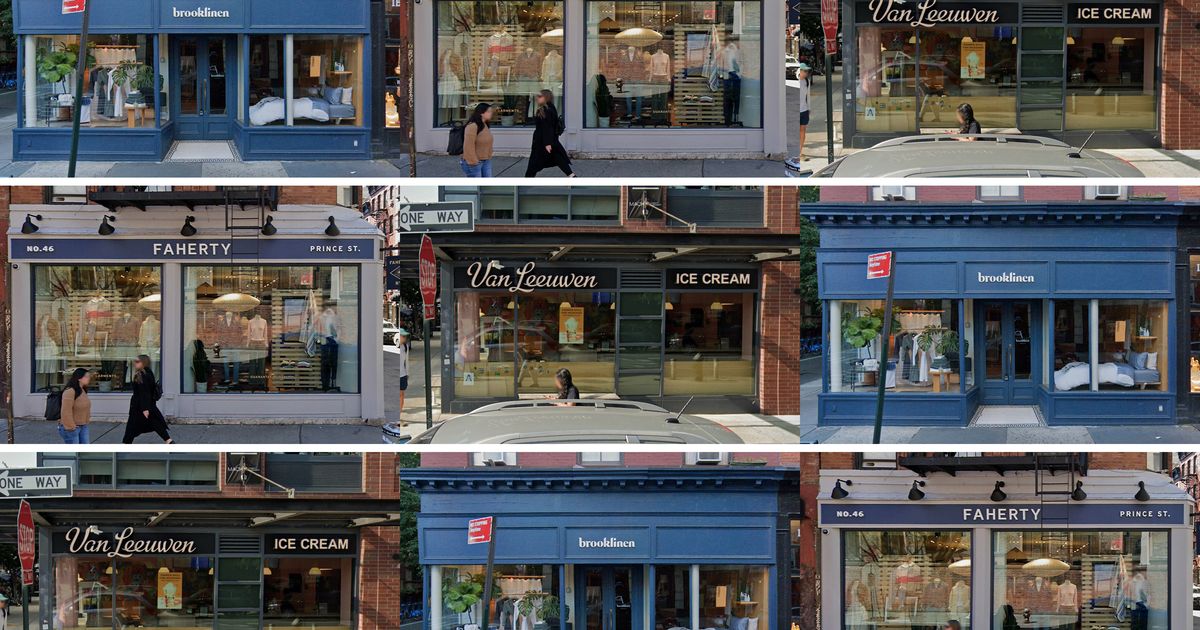
This article was featured in New York’s One Great Story newsletter. Sign up here.
Toya Thomas is the longtime manager of Clare V. on Elizabeth Street in Nolita, a pleasant, tree-lined retail corridor long known for its collection of small, tightly curated boutiques. The strip attracts a lot of locals — and tourists — who are looking for what she calls “niche brands and products” and, more than anything, to find something outside the mainstream shopping experience. Except, she’s been noticing, maybe it’s no longer so unique?
On a recent trip to Williamsburg to visit her boyfriend’s Kent Street barbershop, she noticed the growing collection of stores mirroring the scene on Elizabeth Street. “It’s literally a carbon copy of what’s in Nolita,” she said. “The exact same stores!” Her friend, the manager of Sézane just down the block, noticed it as well. Wherever there’s a Clare V., there’s likely to be a Sézane nearby, they noted, along with a Tacombi.
Not to mention an Everlane, an Aesop, a Buck Mason, a Warby Parker, a Faherty … call it the takeover of the mini-chains. Over the past decade, a new generation of retail brands — including shops like Clare V. that got their start online — have branched out from their Elizabeth Street origins and multiplied across the city. Of course, you won’t find them on mall-brand shopping corridors like Manhattan’s 34th Street or Fulton Street in Downtown Brooklyn. Instead, these chains have congregated in stylish shopping strips like Bleecker Street in the West Village and Cobble Hill’s Bergen Street — corridors that have a distinctly “neighborhood” feel and attract younger shoppers with plenty of cash and a taste for (mildly) adventurous fashion. There are now little Nolitas everywhere.
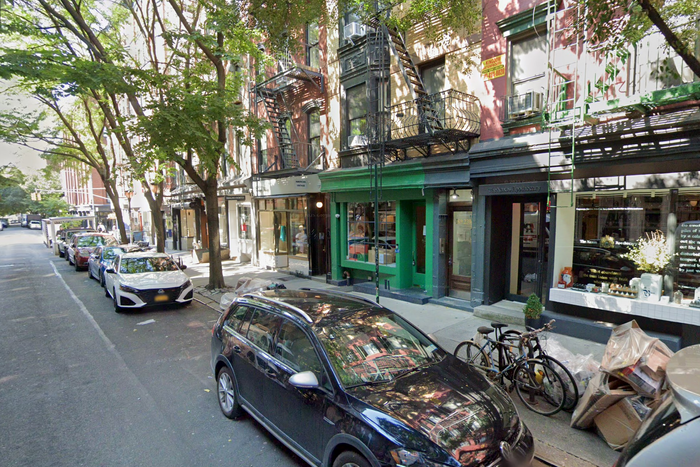
Buck Mason, Le Labo, and Malin + Goetz on Elizabeth Street in Nolita. Photo: Google Maps
Alexandra Yanoff, a commercial real-estate broker with Brand Urban, a retail brokerage, refers to these mini-chains as the “cool kid” brands. They include DTC brands like Everlane and Brooklinen, local designers opening multiple shops around town, and indie boutiques based in cities like L.A. and Paris looking to establish a presence in Brooklyn or Manhattan. “They don’t want to be perceived as a chain,” she said, “even if maybe they are.”
It’s a positive trend for the city, says Jonathan Bowles, executive director at the Center for an Urban Future, who has been tracking the city’s chains for 18 years with the center’s annual State of the Chains report. “I think New Yorkers are after interesting retail and for a while, it seemed the phrase national chain meant something boring and generic — the same retail mix they have in Cleveland,” says Bowles. “But the chains we’re seeing now are retailers with three or five stores — they still seem unique. It’s a more interesting mix than what we had five years ago.”
It also coincides with a noticeable exodus of the megachains. In recent years, some of the most prominent national brands, such as T-Mobile, Starbucks, and GNC, shed dozens if not hundreds of locations within the city, while chains including Rite Aid and Forever 21 exited the market completely, he notes. But the mini-chains are making up for the closings. “There’s still significant growth happening in the retail market, and it’s the newer chains driving the growth,” he says. The city now has 19 Warby Parkers, for example, along with 19 Aesops and seven Buck Masons.
And these chains are catering to a different crowd than the established brands. Many got their start online and know how to flourish in an Instagram world. The shops themselves are often designed to look great in a selfie.
It’s no accident that they’re clustering in very specific parts of the city. Of course, it’s related to where their target customer resides — and where the storefront rents make sense. But take a look at any of the little Nolitas popping up in Brooklyn and Manhattan, and you’ll invariably find a player who had a very specific plan.
Bombas, the ubiquitous online sock seller, launched in 2013, but it wasn’t until this year that it opened its first brick-and-mortar store on Bleecker Street in the West Village — the first of three, including stores in Boca Raton and Austin. Why Bleecker Street? Mainly because it partnered with Leap, an NYC-based “retail platform” that provides everything but the socks. Leap, which has raised more than $82 million in VC funding, leased the Bombas storefront and designed the cheery interior. Everyone working at Bombas is a Leap employee, hired and trained by Leap. Leap provided the counters, shelves, furniture, and POS system. Even the dance-pop playlist humming over the sound system on a recent afternoon was curated by Leap.
And Bombas isn’t the only Bleecker Street retailer that is “Powered by Leap,” as the unobtrusive sticker on the front window signals. In exchange for a monthly operating fee and a cut of the sales, Leap handles operations for ten other stores on the three blocks of Bleecker between West 11th and Christopher Streets, including Leset, Alohas (shoes), Bond-Eye (swimwear), Frankies Bikinis, and Set Active (athleisure clothes). The street functions much like a mall, only with the charm and cachet that comes from being situated on a leafy West Village street.
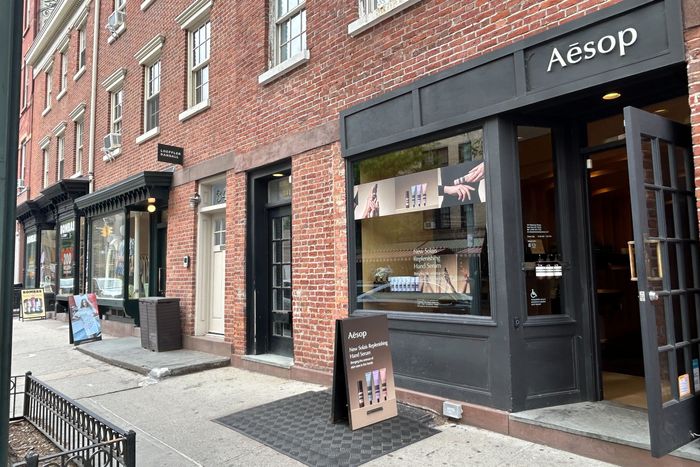
Down the block on Bleecker from Aesop, the Leap-operated Bombas store. Photo: Sukjong Hong
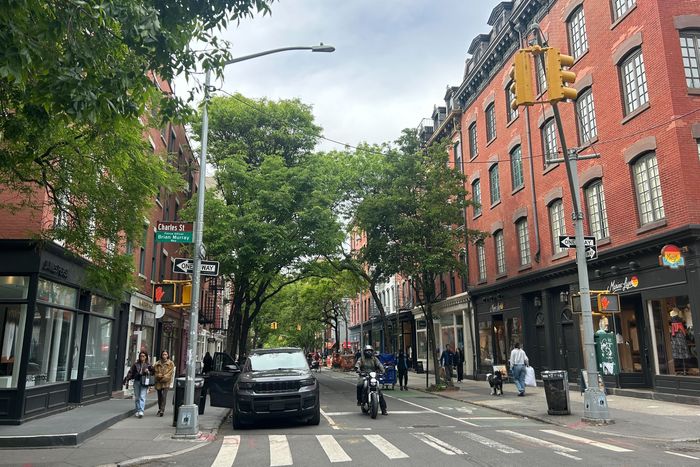
Looking down Bleecker from Charles Street. Photo: Sukjong Hong
While a shopper wandering down the block might experience it as an eclectic mix of small brands, the boundaries between stores are, in fact, quite porous. Some Leap employees bounce between different brands up and down the street. Bombas manager Elizabeth Wasserman, for example, started as a part-time sales associate with Good Life, a menswear shop, and went on to work at Cuts, Set Active, and several other Leap-powered clothing brands before taking her current role. “I’ve sold everything from yoga to men’s pants to socks,” she says.
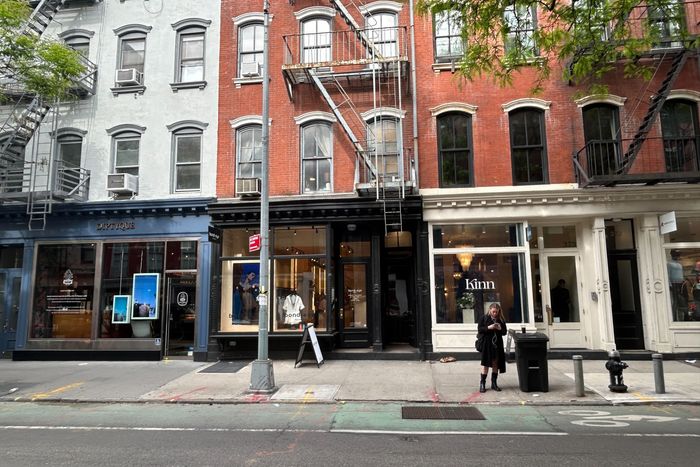
The Leap-run Bond-Eye swimwear store between Diptyque and Kinn. Frankies Bikinis, the swimweasr store on the other side of Diptyque, is also run by Leap. Photo: Sukjong Hong
If the stores seem to share a similar vibe, it’s by design. Leap, which began its occupation of Bleecker Street in 2019, has a specific demographic in mind. “I call it the West Village shopper,” said Jon Levy, Leap’s EVP of retail success, on a recent tour of the corridor. It’s a young, stylish, “premium customer,” as he puts it, and for the most part a woman. The West Village girl will happily pay more for contemporary fashion than what she’d spend at the mall but isn’t quite ready for the luxury price tags of Soho and Madison Avenue.
And by pooling the sales data from all 11 Bleecker storefronts, Leap can help the brands decide what to sell. “We can actually say, ‘We know the Bleecker shopper buys a lot of extra smalls, they buy a lot of black, they buy a lot of athleisure,’” says Levy. The data also suggests new brands that would complement the existing mix. When Leap noticed Frankies Bikinis was doing well on Bleecker, it lured in another upscale swimwear brand, Australia’s Bond-Eye, installing it one door down from Frankies and creating what may be the start of a little swimwear district.
Leap, which now controls 28 storefronts in four clusters around the city (and 105 nationwide in cities like Chicago and L.A.), focused first on Bleecker Street because the West Village location had potential, even though vacancies were high. It meant the rents were cheap, and the small storefronts — typically under 1,000 square feet with limited storage space — were perfect for fledgling brands with limited production runs.
Levy says Leap had a big hand in revitalizing this stretch of Bleecker Street, which is now buzzing with stores, cafés and restaurants. “You bring a great brand, who brings a great shopper, and then the other brands show up,” says Levy. Here, the Leset and Diptyque shopper can explore newcomers like Kinn, the L.A.-based jewelry brand that opened its first New York shop this year, and Loeffler Randall, which first set up shop in Soho and has just four stores total.
And while Leap controls only a third of the storefronts on the strip, its presence looms large. It throws what may be the world’s only VC-backed block party, a semi-annual affair with DJs, live music, and face painting that shuts down the street. For anyone trying to get on the strip now, it’s nearly impossible to snag a storefront on Bleecker if you don’t go through Leap, complained at least one commercial broker.
It’s showing up in the rents too. Thanks to increased demand, lease rates on Bleecker Street have doubled since 2023, to $440 a square foot, according to the Real Estate Board of New York, while rates for storefronts on mall strips like 34th Street and 125th fell during that same period, to $383 and $135, respectively.
Could Leap become a victim of its own success? It snapped up a large number of ten-year leases on Bleecker Street during the pandemic. When these leases inevitably renew at higher rates in a few years, the retail economics may not math out and Leap tenants looking to expand may have to go elsewhere. Some, as a matter of fact, already are — and in the most unlikely neighborhood.
Until recently, it would have sounded bonkers to refer to the Upper East Side as the new Nolita or West Village. And it’s still a bit of a stretch. But store-wise, it’s definitely headed that way, said Brand Urban’s Alexandra Yanoff on a recent tour of the area. In the past two years, a growing number of downtown residents in their mid-to-late 30s who have gotten tired of living in fourth-floor walk-ups and want more space to raise a family have “discovered” the Upper East Side between Lexington Avenue and York. And the mini-chains that cater to them — Gorjana, Solidcore, Vuori — are following them uptown, dotting stretches of Second and Third Avenue between 72nd and 86th Street.
Yanoff is one of the commercial brokers shepherding the move. She’s suited to the job, she notes, because she epitomizes the new face of the Upper East Side. Fashionable, fit, and 34 years old, she lived alone in a series of one-bedroom apartments on the Lower East Side, Greenwich Village, and Flatiron until last year, when she and her partner moved to a two-bedroom on East 83rd Street with an elevator and a doorman.
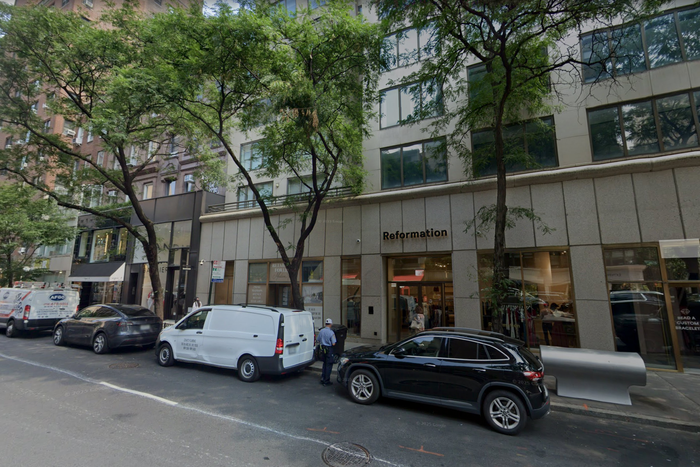
Photo: Google Maps
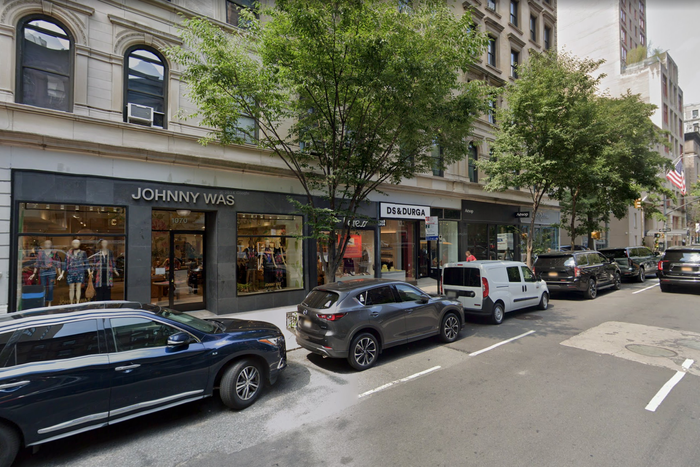
Fragrance brand D.S. & Durga got its start on Mulberry Street in Nolita. It opened on the Upper East Side two years ago. Photo: Google Maps
“And now I’m like, ‘I want my good restaurants, my good shopping, the good services,’” she says. “Everybody wants to see the cool places in their own neighborhood, me included. And so all these operators that have existing locations downtown see the need to be here.”
Yanoff often works with brands that have until now been online only, or have been operating a single location in another city such as L.A. or Paris, that are looking to open their first outpost in New York City. They typically want to debut downtown, for the cool factor. “You want to be perceived as a cooler, edgier brand and then become a little bit more mainstream,” she said. But they’re increasingly open to the Upper East Side for a second or third location. “In the past, if you were a cool-kid brand positioning yourself in Noho or Nolita, the Upper East Side would never have been your second unit,” she says. “Maybe the West Village. You would have stayed in your downtown neighborhood. But now everyone sees the power of the density here.” That’s how, for example, she got downtown shop Susan Alexandra to open its second store in the area along with Sézane.
This would sound a bit promotional if it weren’t for the evidence. Pura Vida, the Florida clean-food chain with its $20 tuna wraps, has a new outpost here as does Café Maud (“always slammed!”), Reformation, Framebridge, and, of course, Warby Parker. It’s a bit of a risk to the carefully crafted brand image — the mini-chains want to maintain their downtown, indie cred, and the Upper East Side is as stodgy as Manhattan gets. “But all it takes is one really notable tenant performing for the rest to be talking and then looking there,” says Yanoff.
Another factor: The fledging chains are increasingly priced out of desirable downtown locations. There are bidding wars on every Elizabeth Street storefront with rents ranging from $175 to $250 per square foot, Yanoff says. According to REBNY, the asking rent on a 1,000-square-foot Soho storefront is averaging about $726,000 a year (or about $750 a square foot). The same size shop on Third Avenue, meanwhile, would run about $220,000.
Stopping into Pura Vida, Yanoff pointed out the eclectic mix of diners, many of them young (not just ladies who lunch), and she noted that the Miami-based chain, which opened its first NYC locations in Nomad, Williamsburg, and Noho, still didn’t feel like a fast-growing national brand with dozens of locations in California, Virginia, Maryland, and New Jersey. With its minimalist, airy design and creatine smoothies, it’s more like a beachy French café set in a spa.
All of this is definitely changing the feel of the neighborhood. With the condo-construction boom east of Lexington and the chains moving uptown to cater to those residents, the area’s characteristic mom-and-pop stores are forced to move to the side streets or perhaps close altogether. “I’d say the unfortunate part is that now when you’re walking the streets, you’re not discovering as many of the one-off, unique specialty stores you might have encountered in the past,” says Yanoff.
But the game of musical chairs hardly ends there. Across the river in Williamsburg — once Brooklyn’s answer to Manhattan’s downtown — the new residents moving into the waterfront condos are largely young professionals making piles of money in finance and tech. “It’s almost the new Murray Hill,” says Yanoff. And at the heart of the neighborhood, North 6th Street, the cool-kid retail mix is giving way to what may be the inevitable fate for all the city’s little Nolitas: a high-end luxury corridor that includes Hermès, Chanel, and, yes, even mall brands like Abercrombie & Fitch.
It’s been less than a decade since the thrift stores, dive bars, and live-music venues on North 6th Street vanished to make room for a Nolita-like mix of indie boutiques and DTC mini-chains like Buck Mason, Everlane, and Warby Parker. That was followed by an influx of more established names like Lululemon and North Face. But the churn didn’t stop there. “In contrast to the eclectic retail mix on corridors like Manhattan Avenue in Greenpoint or nearby Grand Street, North 6th is Brooklyn’s most curated retail,” noted REBNY in its latest market update.
And who’s doing the curating? The big player behind the shopping on North 6th is a name familiar to everyone in the real-estate biz — Empire State Realty Trust, a $3.8–billion publicly traded company with a commercial space portfolio of 8.8 million square feet including, yes, the Empire State Building.
“We saw a corridor with a unique combination,” says ESRT SVP Fred Posniak, citing the area’s growing base of affluent, “discovery oriented” residents with foot traffic surpassing Manhattan’s top shopping strips and the absence of an institutional landlord with a vision. “Those are rare conditions.”
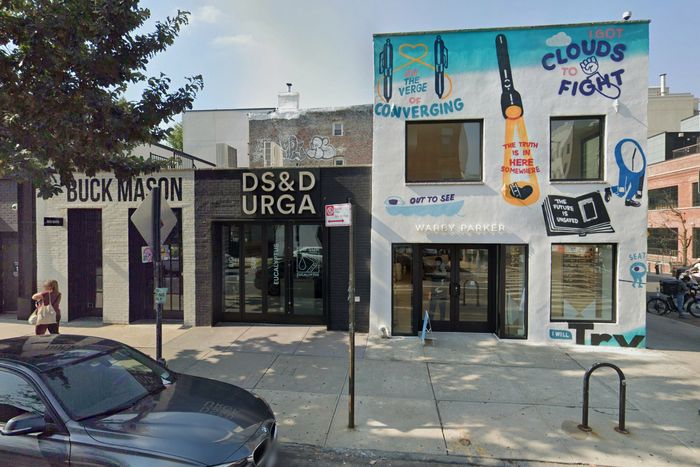
Buck Mason, D.S. & Durga, and Warby Parker on North 6th in Williamsburg. Photo: Google Maps
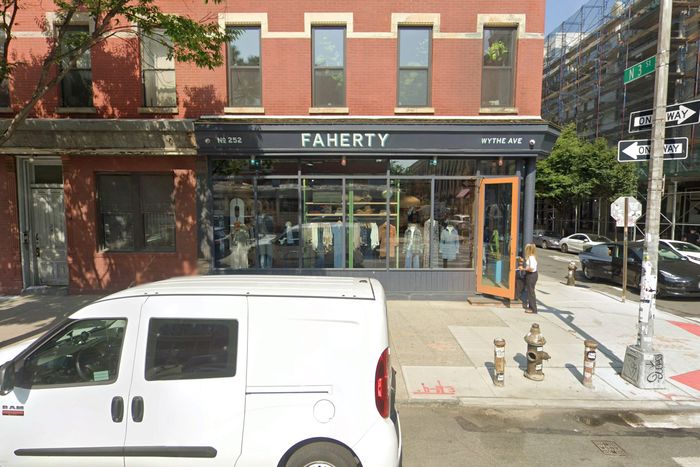
Faherty in Williamsburg. Photo: Google Maps
Beginning in 2023, ESRT spent $300 million snapping up 124,000 square feet of retail space along North 6th. It now owns 27 storefronts in the area occupied by a mix of DTC brands (Byredo, Warby Parker, Glossier), international giants (Nike, the Google Store), and luxury brands. The company says it invested in the area because it believed the trend would continue thanks in part to its own efforts. “The third chapter, now well underway, is the arrival of global luxury,” says Posniak.
ESRT has been marketing storefronts to prospective retail tenants as the “North Six Street Collection” and launched a website, n6street.com, noting the area’s concentration of young, high-income, high-spend residents and tourist appeal. The push is paying off. ESRT has announced lease deals with Hoka, DTC westernwear brand Tecovas, and luxury watchmaker Bucherer.
The march upscale will likely continue. “This is not a one-off moment,” says ESRT’s VP for retail leasing Alec Stone, citing active interest from additional luxury brands. And that will have an impact on future rents. “Their entry has already reset rent expectations and elevated the standard for the entire street,” he says, “reinforcing North 6th as a true global retail destination.”
Indeed. According to REBNY, asking rates on North 6th doubled in the past two years to $400 a square foot. It also includes larger storefronts — typically 1,500 to 5,000 square feet — sometimes quadruple the space of a Nolita or West Village storefront — making the location prohibitive to all but the most deep-pocketed brands. Is this the inevitable fate of all the city’s little Nolitas?
“That’s the magic question,” says Jon Levy at Leap, the company that transformed Bleecker Street. “Only luxury can survive those high rents, and that’s not the West Village shopper. So you might get the same thing that you had in 2016 — the stores and restaurants close and you get the high vacancy rates. Then Leap comes back in 2040, and the whole thing starts all over again!”
Updated on May 12: This story has been updated to correct the number of storefronts ESRT owns in Williamsburg and to clarify its stock valuation.
One Great Story: A Nightly Newsletter for the Best of New York
The one story you shouldn’t miss today, selected by New York’s editors.
By submitting your email, you agree to our Terms and Privacy Notice and to receive email correspondence from us.