
The jury and the public have had their say — discover the remarkable winners of Architizer’s 14th Annual A+Awards. Subscribe to our Awards Newsletter to receive future program updates.
The Winners’ Gallery for the Architizer A+ Awards always features an astonishingly diverse array of projects. As the world’s largest architecture awards program, the A+ Awards are encyclopedic in scope, seeking to represent global architecture in all of its richness and variety.
Nevertheless, clear trends do emerge each year — even across such a vast data set. And in 2026, the signature trend is the death of the architect. Or to put it more diplomatically, it is the tendency for high-profile projects to reflect something other than the uncompromising vision of an individual. As A+ Awards Juror Gokhan Avcioglu put it, “The industry is moving past the era of the singular gesture. Today, the most impactful architecture serves as the mediator between human experience and the natural world.” Juror Ismail Seleit agrees, writing that “This year felt like a welcome return to thoughtful, human-scaled architecture that puts place, craft and environmental sensitivity first instead of chasing spectacle.” This is a far cry from architecture conceived as “the will of an epoch translated into space,” as Mies van der Rohe put it way back in the 20th century.
The decentering of the will — defined in the German sense that Mies used it, with its connotations of clear intentionality and the heroic act of overcoming — is a trend that, in architecture, extends beyond the A+Awards. In awarding Smiljan Radić Clarke the 2026 Pritzker Prize, the jury praised the architect for “refus[ing] a repeatable architectural language,” explaining that, for Radić, “each project is approached as a singular inquiry, grounded in first principles and informed by noncontinuous history. Context, use and anthropological awareness take precedence.” Radić himself took care to explain that “there is no message in what I do” and that he does not want his work to be understood as “a kind of sermon about what is good or bad in architecture.” It is hard to imagine a Pritzker winner from twenty years ago saying something so modest.
In addition to these scattered anecdotes, there is also an elephant in the room: the fact that very few truly global architecture stars have emerged in recent years. In his February 2026 article “The Death of the Stararchitect,” architect and professor Aaron Betsky reports that his current architecture students “have never heard of Bjarke Ingels, Liz Diller or Norman Foster. Pressed to name an architect practicing today they admire, they shrug. In fact, the only modern or contemporary architects they have heard of are Frank Gehry, Zaha Hadid and Santiago Calatrava (but only because of the Oculus in New York) – and two of those are deceased.” He concludes that the profession is no longer producing stars like it used to. Even architecture students aren’t interested in individual architects.
At one level, this might be a good thing. After all, architecture has always been a collective enterprise, emerging from the labor of architects, engineers, contractors, and the vast civic and institutional networks that make building possible. Even Zaha always had a team around her. Professor Betsky’s students might just understand, at an instinctive level, that architecture was never really about architects after all.
It sounds nice. But still, there is a part of me that cannot help but bristle at these trends. Especially in the age of LLMs, when activities once thought to be the domain of human creativity are being taken over by machines, there is a sense in which the decline of the so-called “starchitect” feels like the demise of something bigger: the importance of the individual in relation to the creative act. And that is not something that can be unproblematically celebrated.
My position in this essay is somewhat like Radić’s, but applied to the reception of architecture rather than architecture itself. I am not going to presume to say whether it is “good or bad” that the contributions of individual “stars” are being given less weight in the assessment of buildings. (It seems obvious to me that this is good in some ways and bad in others. Instead, I am going to consider what this development might indicate about the future of architecture and creative work more broadly.
When Goethe first encountered Michelangelo’s ceiling fresco in Rome, he found himself awed not by its religious themes but by the magnitude of human achievement it represented. He wrote this to a friend: “Without having seen the Sistine Chapel, one can form no appreciable idea of what one man is capable of achieving.” I felt something similar when I saw the Giacometti retrospective at the Solomon R. Guggenheim Museum in 2018. It wasn’t just Giacometti’s art that moved me — or Frank Lloyd Wright’s architecture. (I had been to the Guggenheim dozens of times.) In this case, the architecture facilitated the curatorial vision, allowing the story of Giacometti’s life and art to unfold gradually across an ascending spiral pathway, a journey toward the light. Something about the space brought Giacometti to life in a new way for me, and I was very alert to the fact that this museum concept was the product of a single person, someone who was flawed and limited in many ways, but who never lost faith in the integrity of his own creative vision. The connection I felt to the exhibition was inseparable from the connection I felt to the architect as an individual with a particular biography, a person I felt I knew something about.
Even then, though, there was a voice in my head warning me against investing too much in the mythology of the individual architect. That voice belonged to Roland Barthes, whose landmark 1967 essay “The Death of the Author” laid out a new framework for understanding authorship, displacing the locus of creativity away from the individual subject and deconstructing the myth of the “genius” that had, for centuries, held sway over the way people talk about art, literature and architecture, especially in the West. The influence of Barthes’s essay cannot be overstated. Its reverberations can be felt, I believe, in the comments of A+ jurors discussed above.
Barthes’s idea is that creative work involves engaging in a system of signification that is fundamentally shared, not original to any individual. He is talking mostly about literary writers here, but as a structuralist semiotician, he of course understood that architecture, too, is a language: a system of codes that architects remix and adapt to specific situations. For example, Frank Gehry’s radical intervention into his Santa Monica neighborhood, in which he added jagged appendages of chain link fence and corrugated steel to a placid Dutch colonial home, is only legible within its context, this background understanding of what an affluent suburban home “should” look like.
Transfer that same structure to a neglected postindustrial neighborhood, of which there are many across the US, and the building would just look like a random assemblage of junk. Barthes would argue that we make a mistake when we credit the originality of the building to Gehry, the individual who happened to make the intervention, and not the context that made the whole thing possible. To put it simply, the building was produced by culture, history and language — not Gehry.

Mae On Art Forest by EKAR, Mae-On, Thailand | Popular Choice Winner, Sustainable Adaptive Reuse or Renovation Project, 14th Architizer A+Awards
Barthes: “The modern writer (scriptor) is born simultaneously with his text; he is in no way supplied with a being which precedes or transcends his writing, he is in no way the subject of which his book is the predicate; there is no other time than that of the utterance, and every text is eternally written here and now.” It is the reader, ultimately, that brings meaning to a work, and as such, the meaning of any and every text is changing all the time as new generations of readers find different things to love (and hate!) in classic texts. This idea translates nicely to architecture, as almost every building outlives its creator, often being repurposed in ways the architect could not have imagined. In addition, very few finished structures reflect an architect’s vision exactly, as the design and building processes are fraught with endless logistical compromises. Even the Guggenheim is not exactly what Wright had in mind; he wanted to paint it pink, which I actually think would have undermined the solemnity of that Giacometti exhibition. Maybe I shouldn’t have given him so much credit after all…
The authority of the author was, for Barthes, always an illusion. What was new, he thought, was that this illusion had, for various historical reasons, become impossible to sustain. The jig was up, and the time was ripe for revolution: “We know that in order to restore writing to its future, we must reverse the myth: the birth of the reader must be requited by the death of the Author.” An intellectual and creative culture that was truly participatory — in which author and reader met each other on an even plane — that is what Barthes had in mind. And it sounds great. It also seems compatible with the idea of a “human-scaled architecture that puts place, craft and environmental sensitivity first,” to repeat the phrase of A+ Juror Gokhan Avcioglu.
If this type of democratic design culture were to follow the death of the architect, I would be happy about it. Who wouldn’t be? Unfortunately, I am not so sanguine. The myth of the architect, as mystifying and ideological as it was, ultimately did have a function, in that it gave people a way in, a means to connect with architecture. My fear is that, in the absence of superstar architects and iconic contemporary buildings like Bilbao, people will lose interest in architecture altogether — or become even less interested than they are already. And this would be tragic indeed, yet another frontier of social alienation.
People like to learn about human beings, their lives and struggles. Even Goethe wasn’t above it; his admiration for the Sistine Chapel was inseparable from the image of Michelangelo reclining on the scaffold, patiently working on his magnum opus in silence. As a high school teacher, I have found the best way to get my students interested in Shakespeare is to tell them about the questions surrounding his love life. The formal aspects of a work of art — a building or otherwise — are often not enough to get people invested in it emotionally. Interestingly, this is something Barthes understood very well. His final book, Camera Lucida, combines semiotic investigation with memoir, examining the relationship between the art of photography and the practice of mourning. Writing during a period of deep grief following his mother’s death, Barthes argues that what moves one in a photograph is not the image itself, but the suggestion of something more, a trace of the real that exists somehow above or beyond the work. This something more — he calls it the “punctum” — points to a lived context that the perceiver can identify with imaginatively. While the punctum is phantasmagoric — it isn’t there, not really — it is nevertheless a necessary condition for aesthetic experience.
In the end, Barthes was wrong about the death of the author. It did not lead to a more participatory literary culture. If anything, it accelerated the process of literature’s cultural marginalization. My fear is that the death of the architect could herald something similar for architecture. Preventing this fate requires, ironically, authors: a generation of architecture writers who are able to make architecture meaningful to ordinary people on a human level. I am thinking of writers like the recently deceased Robert Campbell, whose commentary at the Boston Globe was peppered with humor and infused with love, not just for architecture, but for the city of Boston. Or Ada Louise Huxtable, whose columns on the personalities and politics behind major building projects, especially in New York, were as captivating as any airport novel. More recently, Thomas Heatherwick’s 2023 book Humanize provides a popular audience with an accessible primer on major debates within architecture. A prominent architect himself, Heatherwick’s book is just like his work: good natured yet provocative.
Programs like the A+Awards, too, are invaluable in their ability to broaden the audience for architectural discourse, allowing readers to encounter projects and perspectives from all around the world. At their best, awards programs encourage the types of conversations that keep creative endeavors alive. They allow people to see that the practice of architecture is something deeply human, reflecting values and aspirations that they can relate to. The architecture profession might not need superstars, but it does need stories. Everyone does.
The jury and the public have had their say — discover the remarkable winners of Architizer’s 14th Annual A+Awards. Subscribe to our Awards Newsletter to receive future program updates.
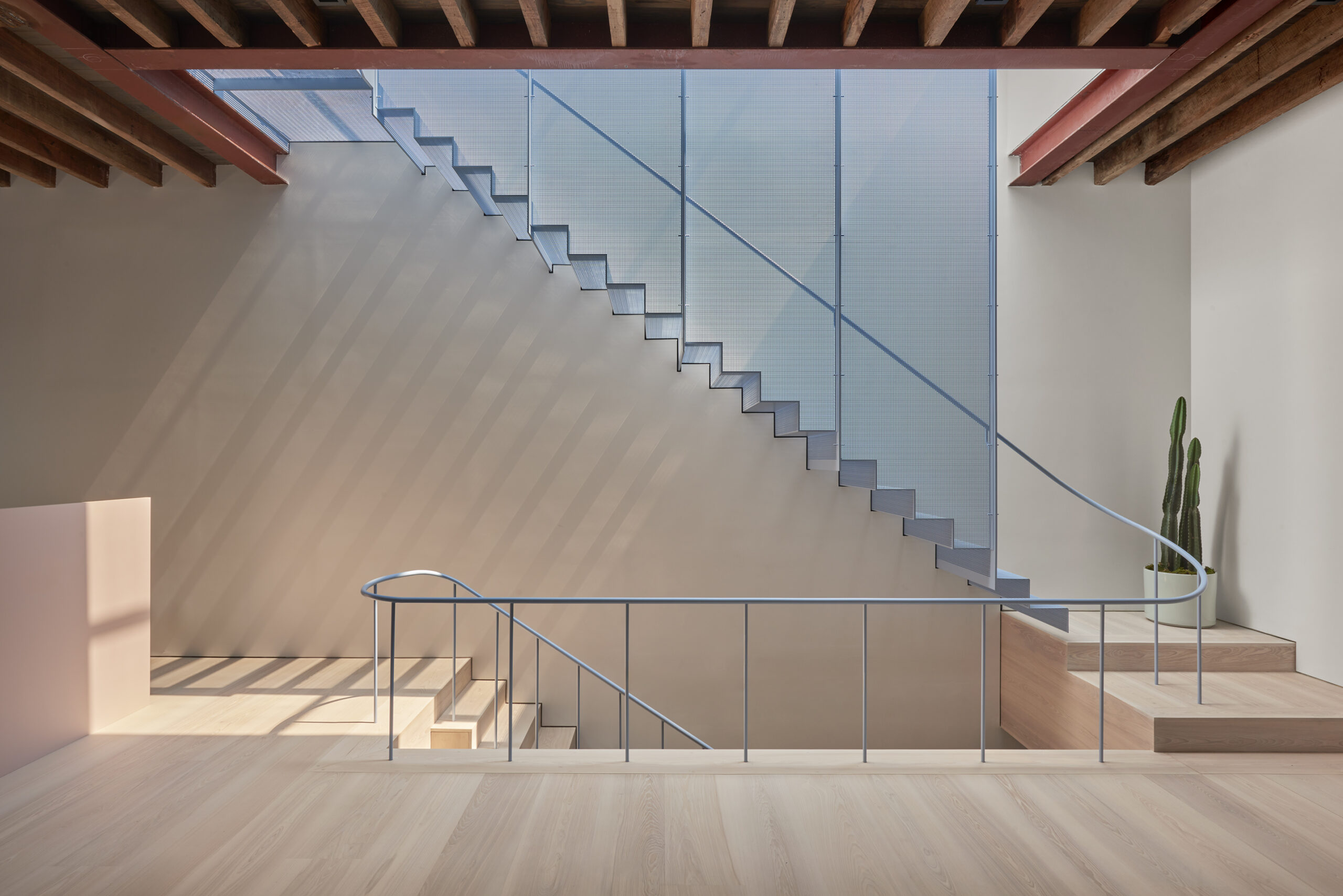
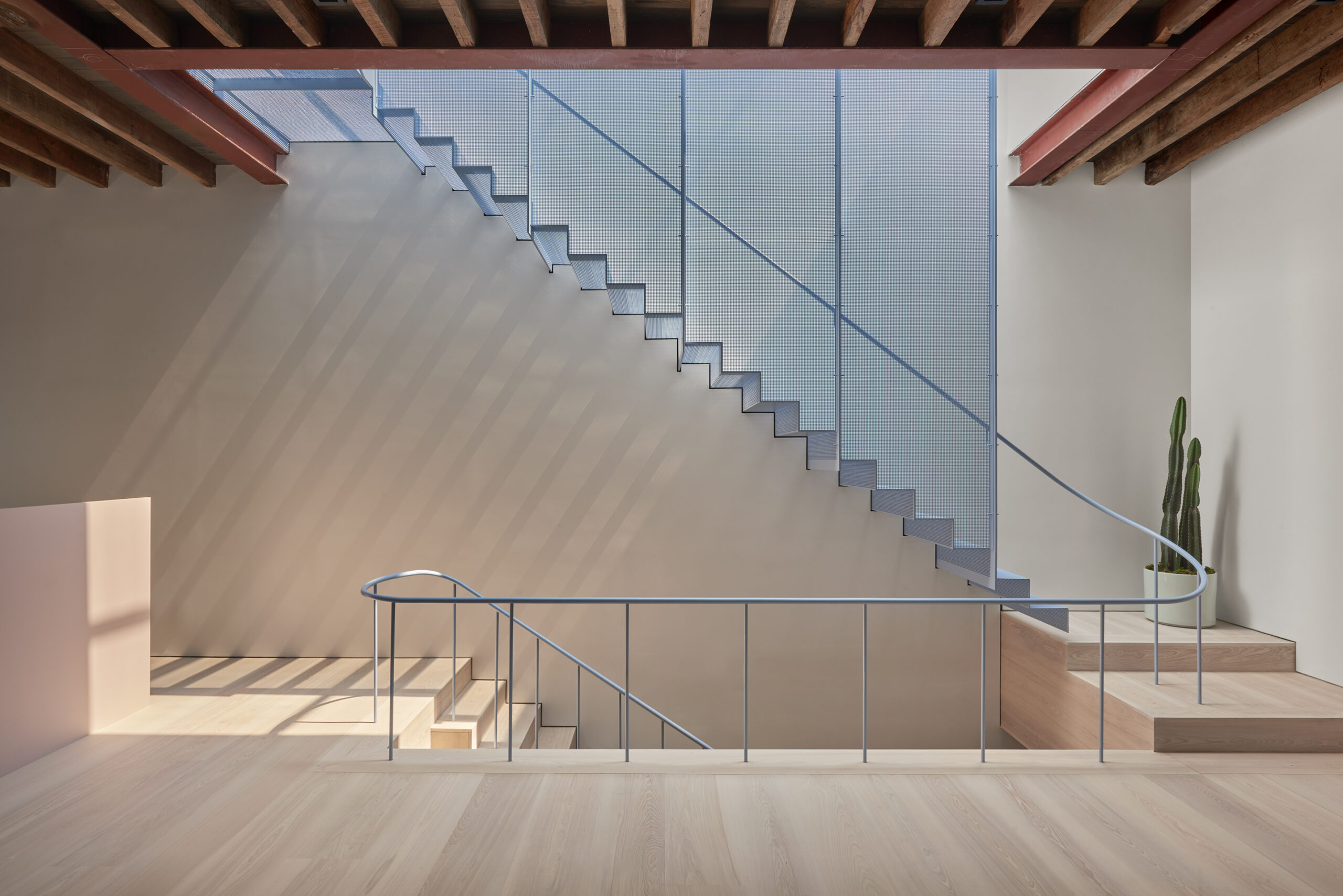
Cover Image: Design Studios Collaborative by O’Neill Rose Architects, Brooklyn, NY | Jury Winner, Commercial Adaptive Reuse Project